
Kelsey Barlow, Senior editor
I'm the senior editor, which mostly means I'm the one who has to defend the rankings. A dehydrator gets onto a list because its spec sheet, its manual and a big pile of owner reviews agree with each other, not because it happened to be on sale the week we updated.
The question I spend the most time on is space. Listings sell dehydrators by tray count, and that number on its own tells you very little. I turn every tray into square inches from the stated dimensions, check whether it's round with a hole in the middle or square, and read what owners say about how much really fits once a mesh liner is in. I look just as hard at the footprint. A nine-tray cabinet that takes over half your counter is a different purchase from a stacker that goes back in the cupboard.
I write the guides on choosing a dehydrator, freeze dryers versus dehydrators, trays and liners, and cleaning. I edit everything else.
Careful reading is the job, and we reopen the lists whenever prices or models change.
Areas of expertise
- Choosing a dehydrator for your kitchen
- Drying area, not tray count
- Stackable or cabinet-style
- Trays, liners and cleaning
- Freeze dryer or dehydrator
How I work
- Every ranking starts from the manual and the spec sheet. A wattage or temperature that only shows up in a listing title doesn't count.
- Before I compare two machines, I turn their tray counts into drying area from the stated tray dimensions.
- I read owner reviews lowest stars first and keep a tally per model: cracked trays, fans that get loud, timers that quit.
- When a price moves or a model disappears, I reopen the ranking before the next update goes out.
Articles by Kelsey Barlow
Written
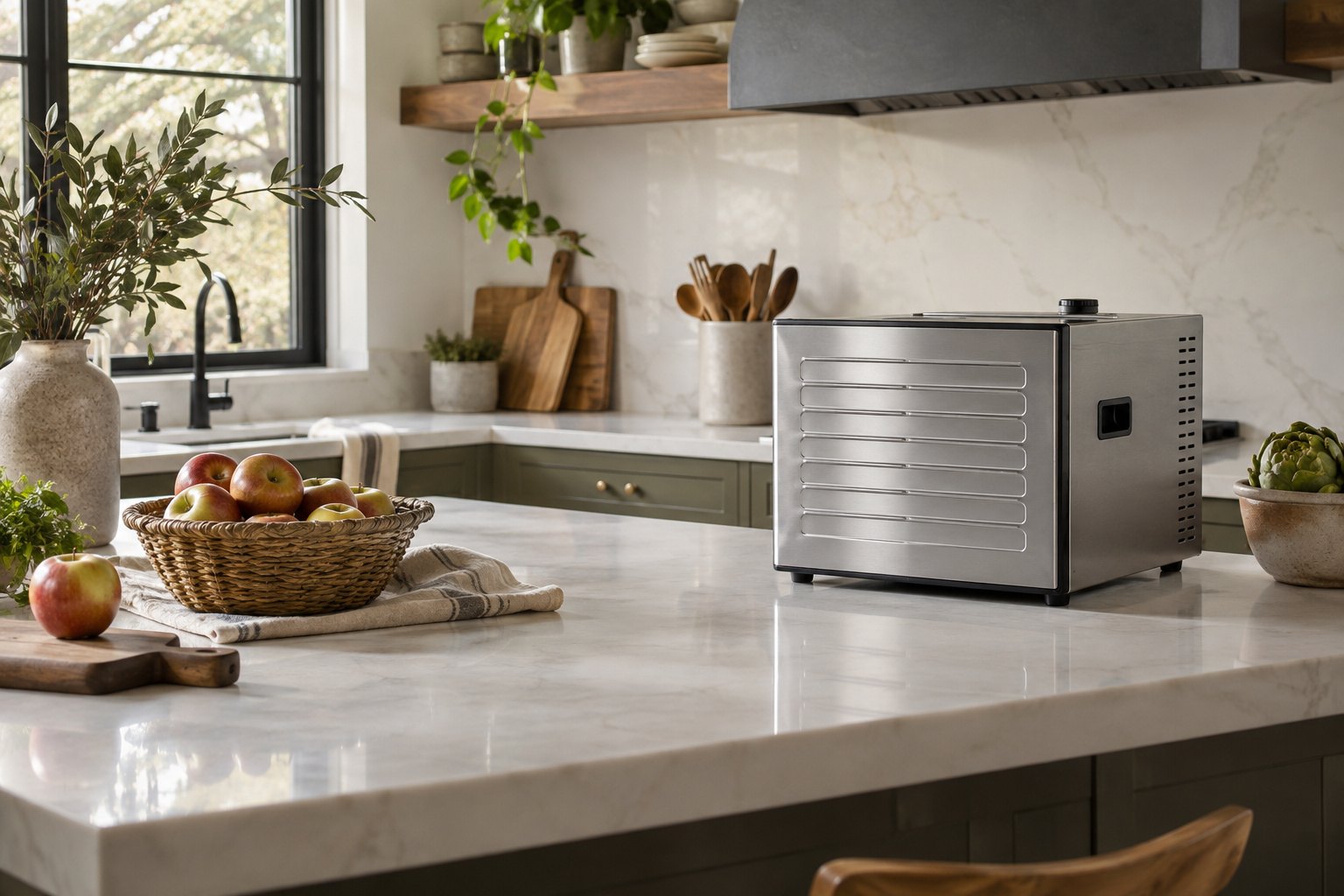 Home food preservation
How to choose a food dehydrator for your kitchen
Compare usable tray space, controls, loading access and cleanup before choosing your first home food dehydrator.
Read the guide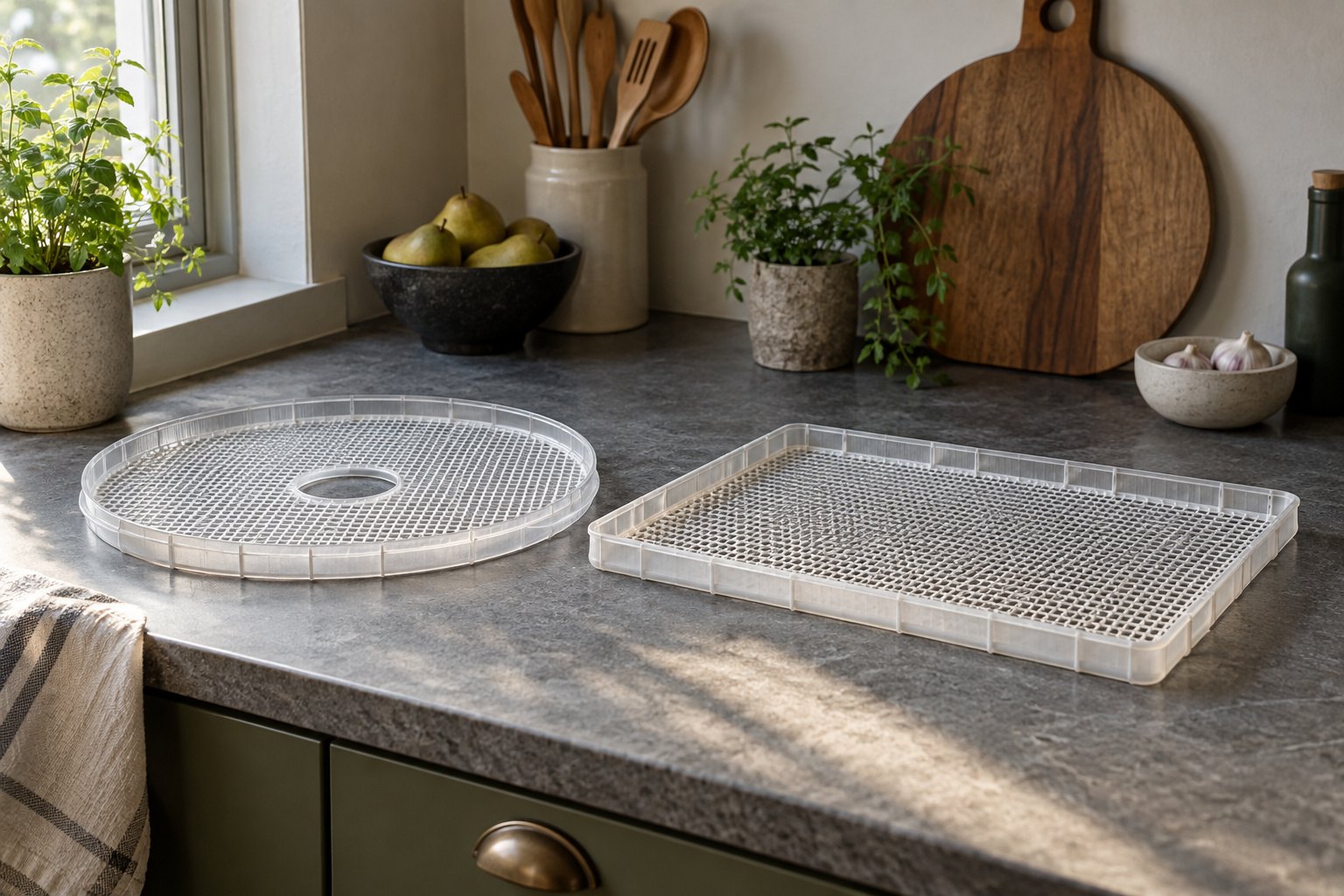 Home food preservation
Dehydrator trays and liners: check fit before you buy
Distinguish racks, mesh inserts and solid fruit-leather sheets, then verify model compatibility and permitted care.
Read the guide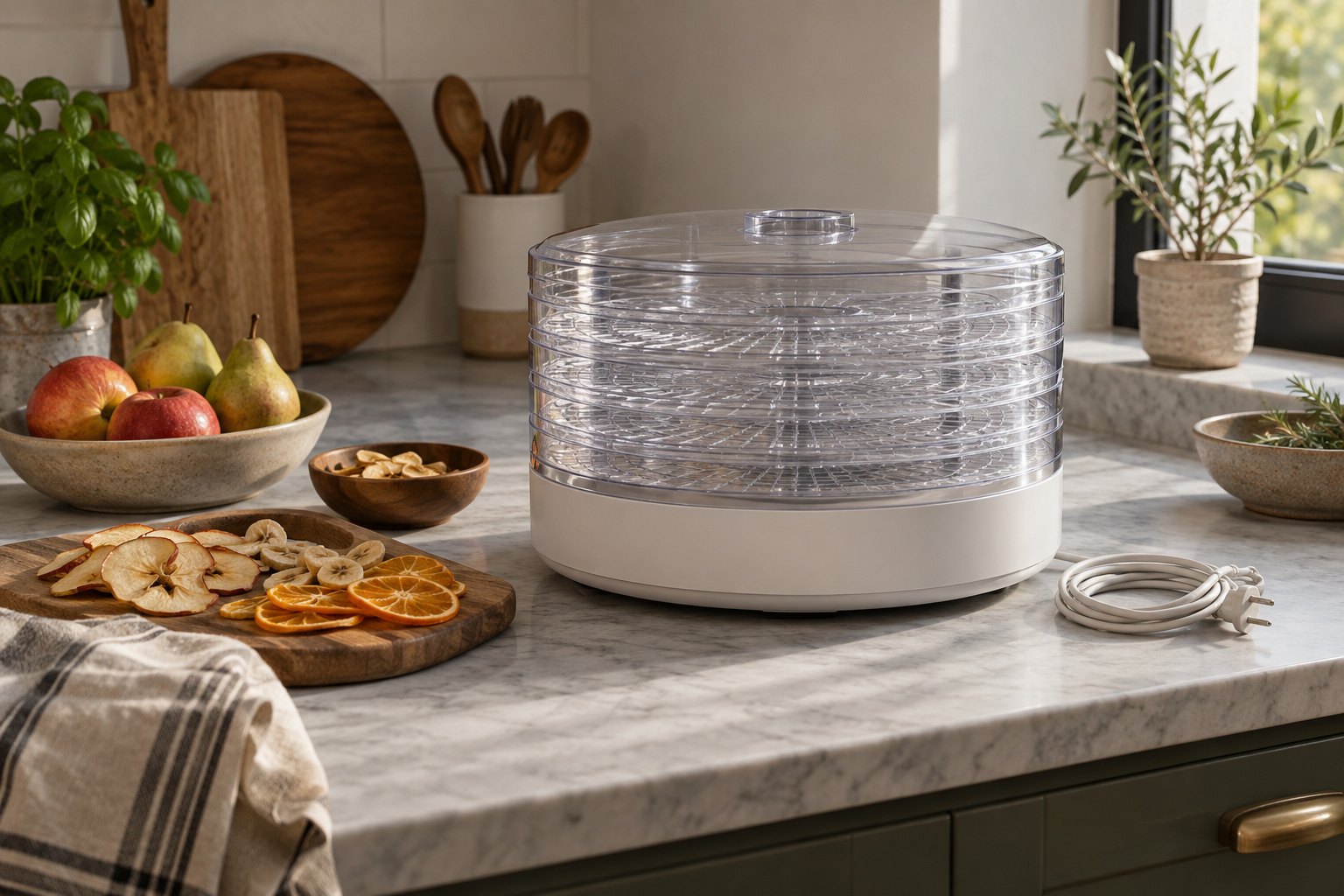 Home food preservation
How to clean a food dehydrator without guessing about its parts
Separate removable food-contact pieces from electrical components and follow the exact model’s care instructions.
Read the guide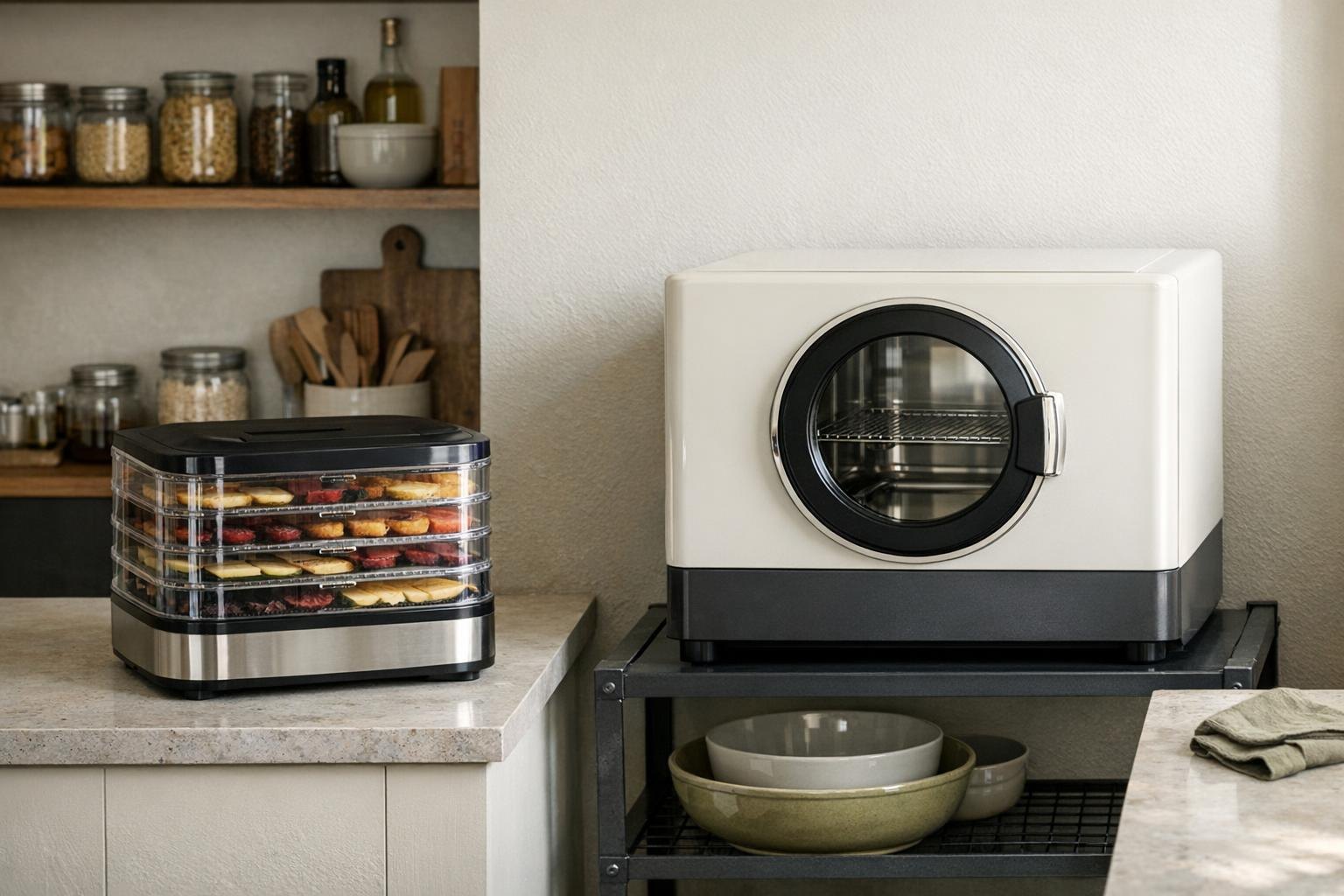 Home food preservation
Freeze Dryer vs Dehydrator: Which Fits Your Kitchen?
Freeze dryer vs dehydrator, compared with extension data: how each removes water, drying time, cost, power, shelf life and which foods suit each.
Read the guideEdited
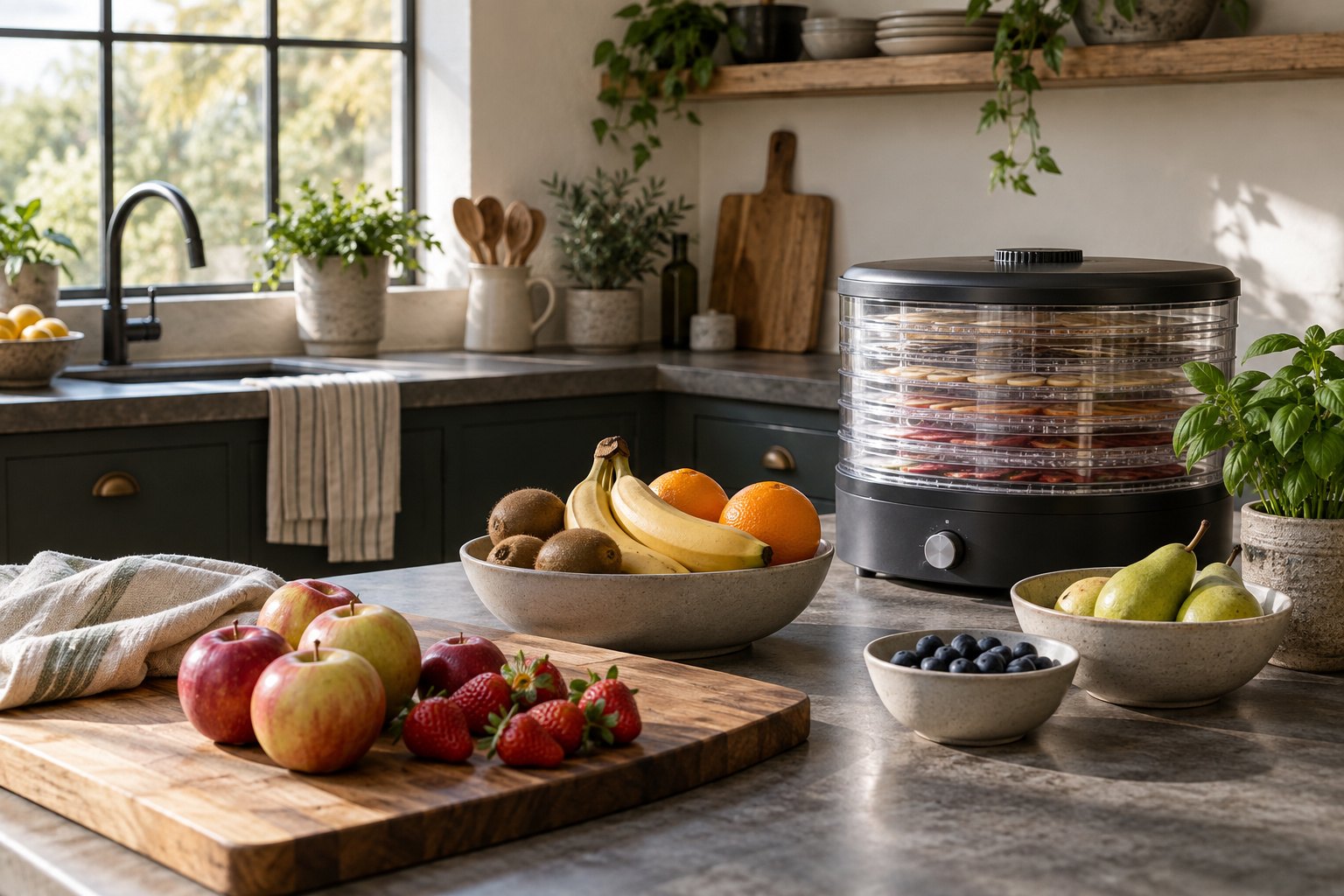 Home food preservation
Dehydrator temperature and food safety: what the dial cannot tell you
Understand drying settings, food-specific preparation and the limits of timers, presets and temperature displays.
Read the guide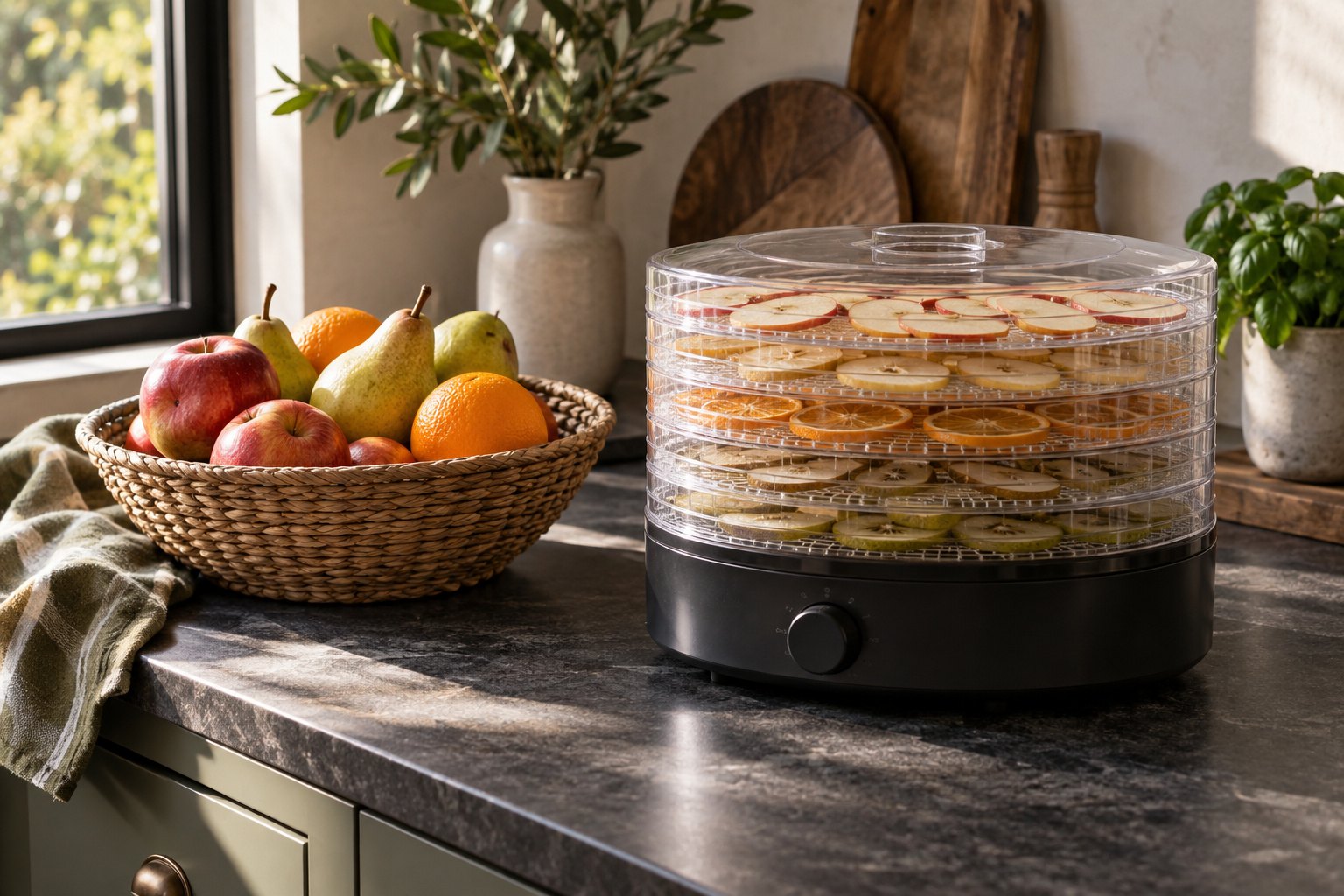 Home food preservation
Drying fruit at home: plan a repeatable first batch
Choose fruit, plan uniform preparation, use a researched method and organize conditioning and storage after drying.
Read the guide Home food preservation
Drying vegetables: preparation, blanching and batch planning
Build a vegetable-drying workflow around the exact food, its required pretreatment and your intended use.
Read the guide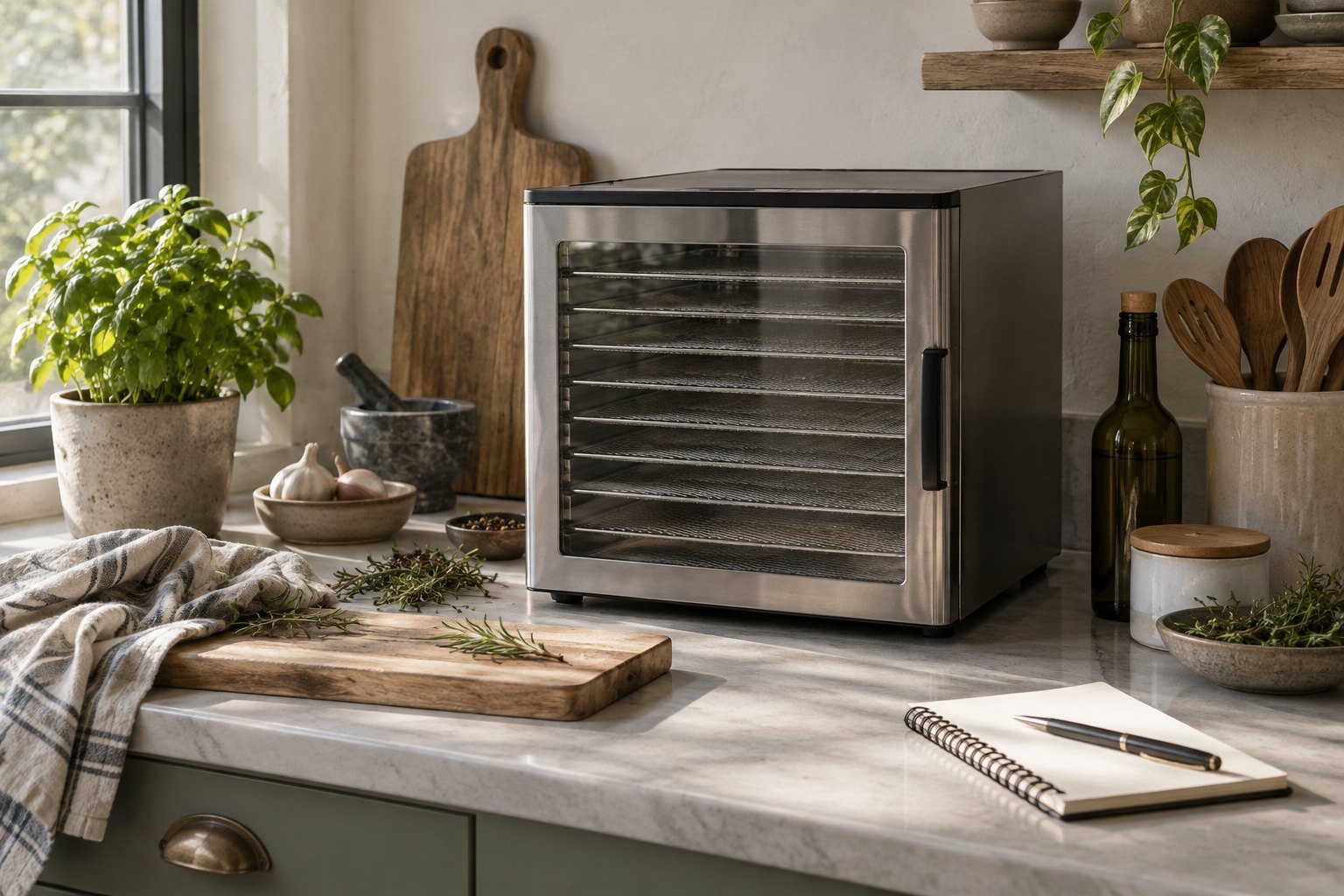 Home food preservation
Jerky food safety: plan the process before buying a dehydrator
Understand USDA’s preheating advice and why a jerky preset, marinade or dry appearance cannot prove safety.
Read the guide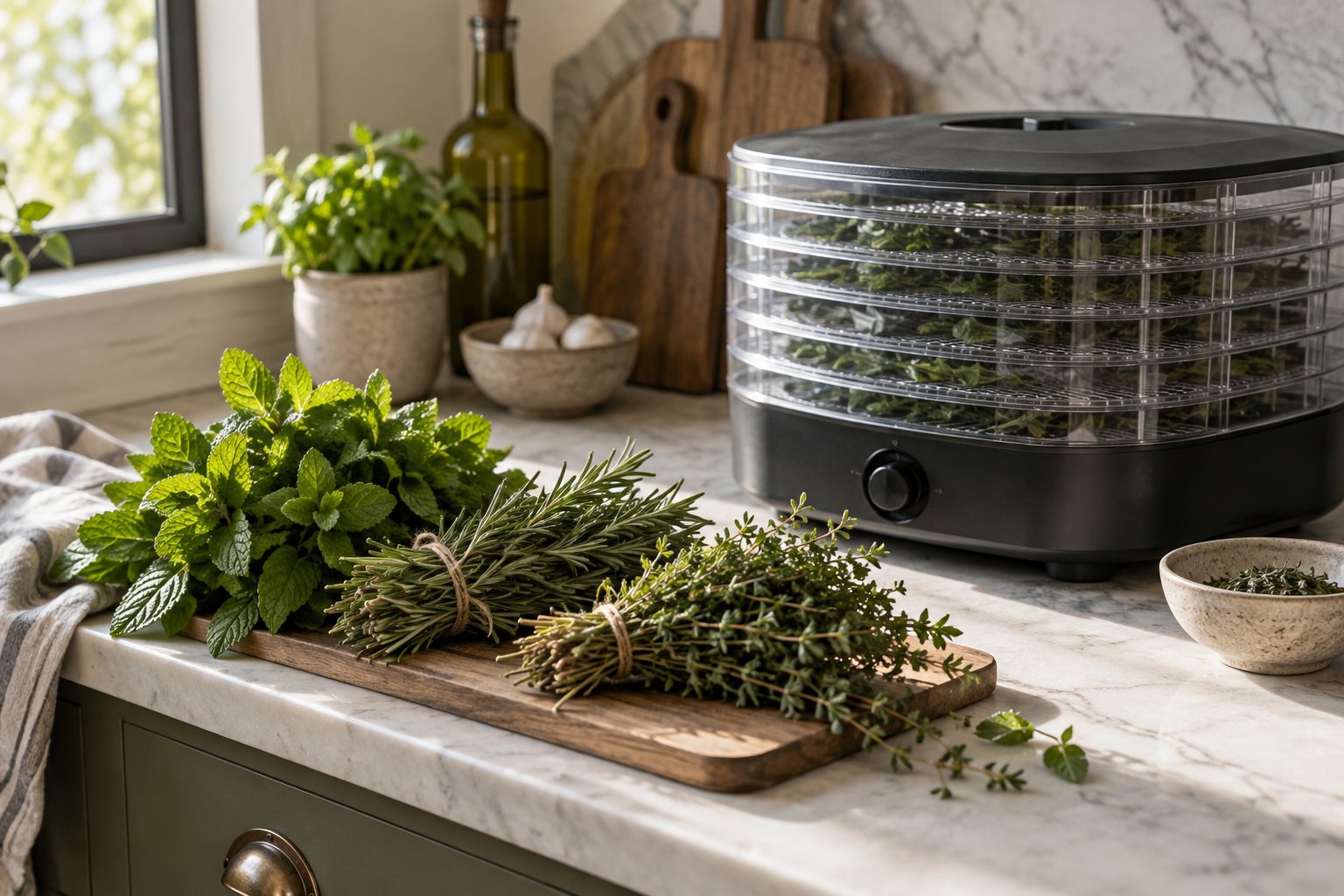 Home food preservation
Drying herbs at home without losing track of the batch
Plan a small herb harvest, check low-temperature controls and choose tray support that suits delicate leaves.
Read the guide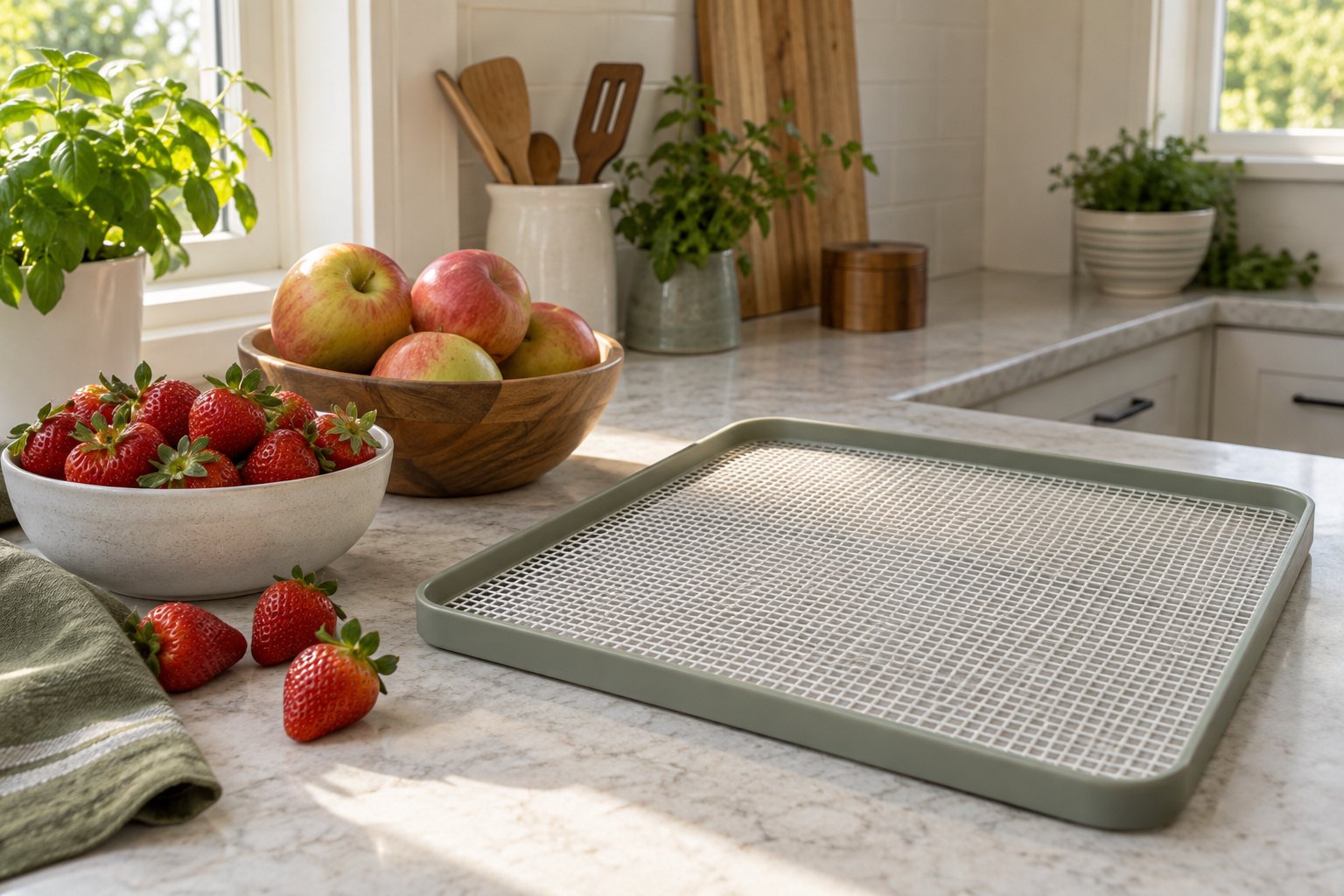 Home food preservation
Fruit leather basics: from puree to an even drying sheet
Plan puree, approved solid liners, consistent thickness and center checks for your first fruit-leather batch.
Read the guide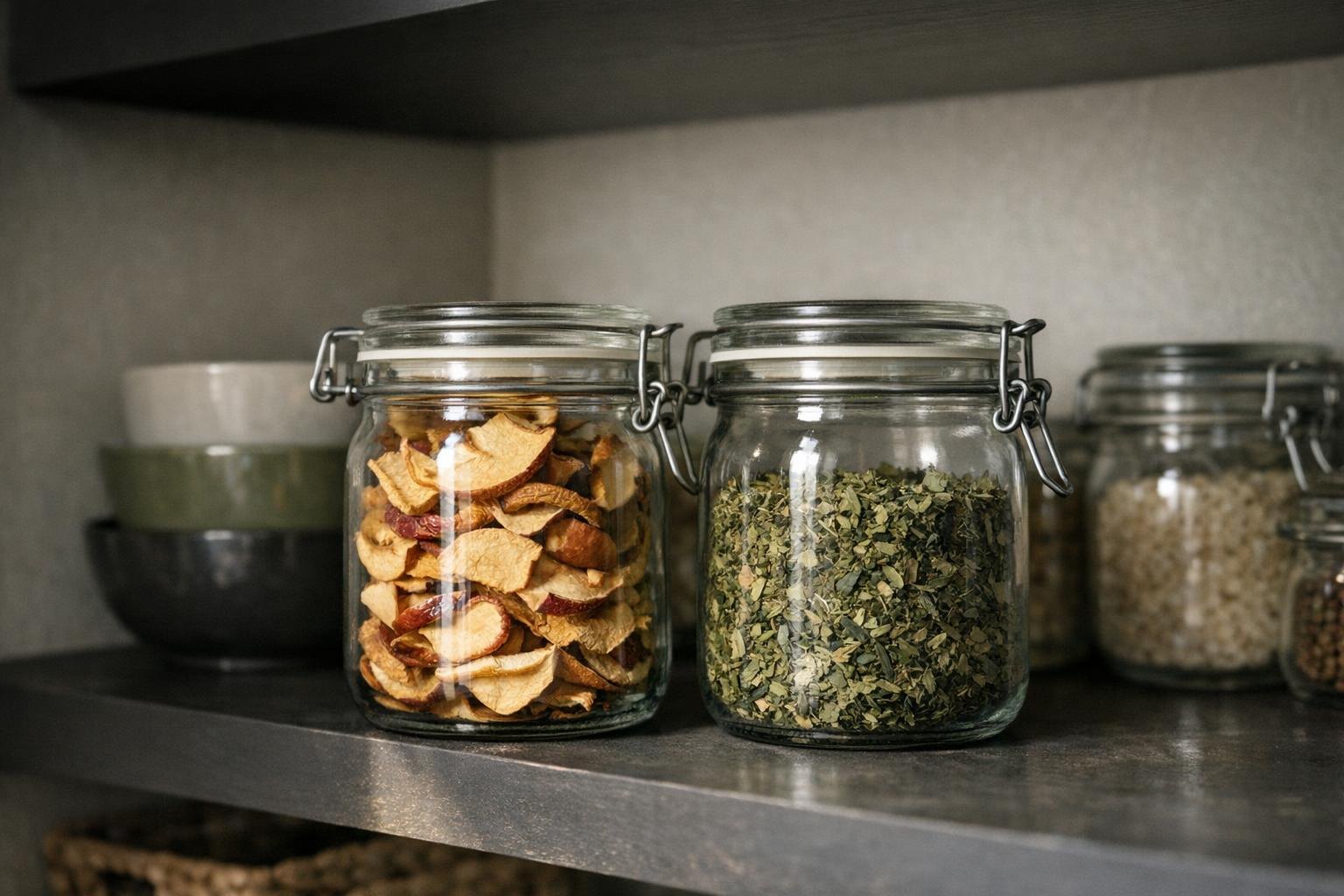 Home food preservation
Storing dried food: cooling, conditioning and batch labels
Organize finished fruit, vegetables and herbs with clear batch identity and food-specific storage instructions.
Read the guide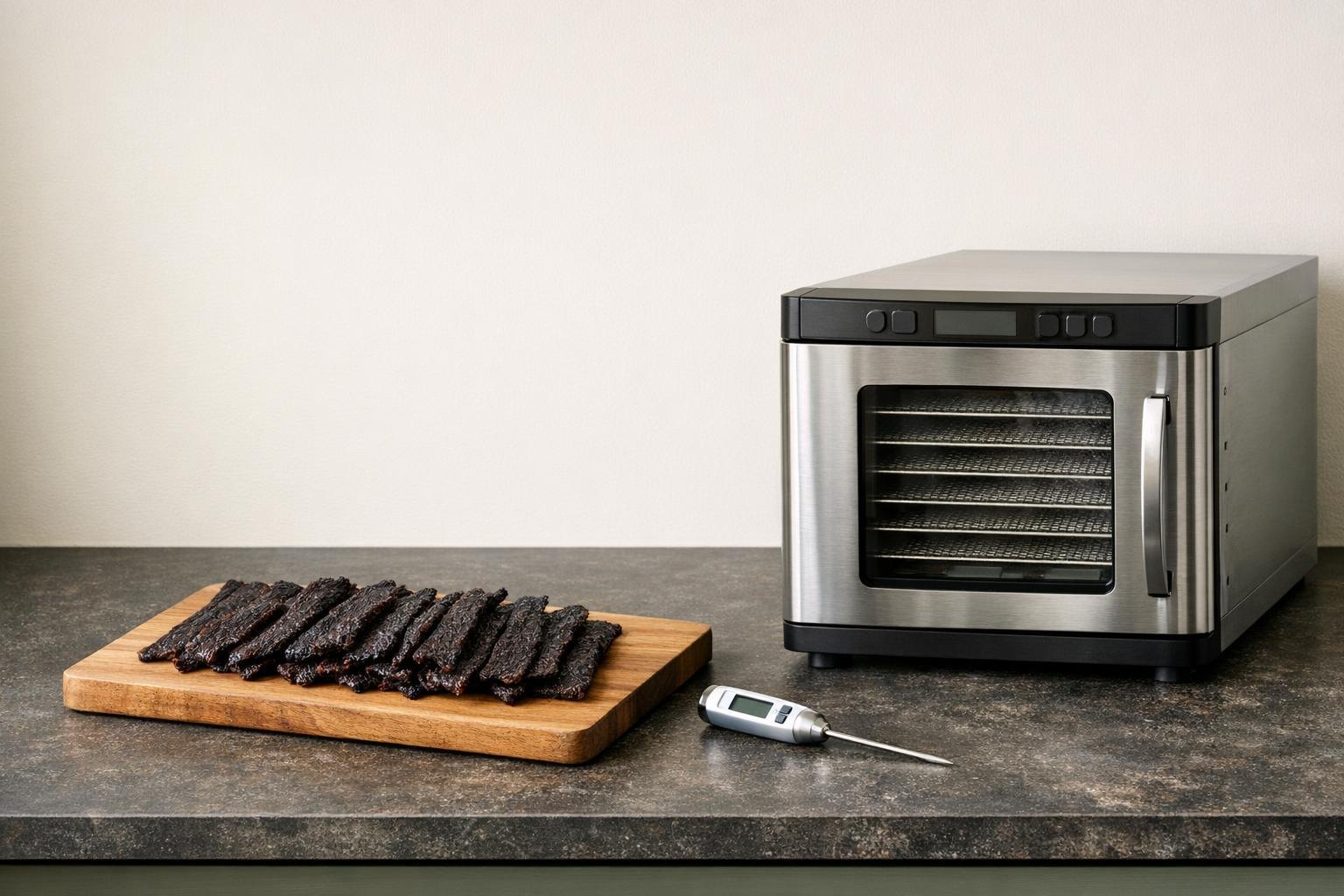 Home food preservation
How to Make Beef Jerky in a Dehydrator Safely
Make beef jerky in a dehydrator the USDA way: lean slices, a 160°F heat step, a 140°F drying run, the bend check and short, cool storage.
Read the guide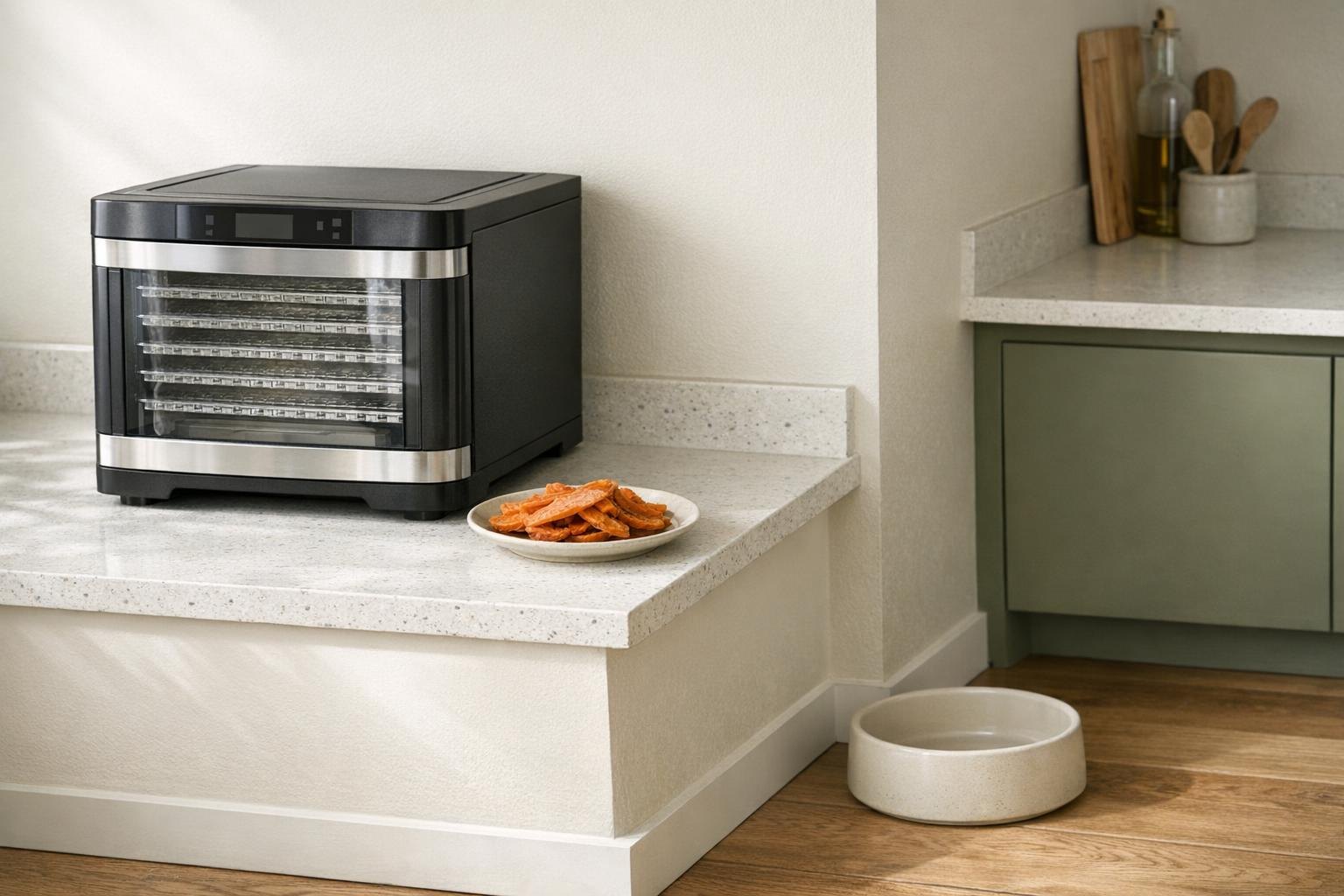 Home food preservation
How to Dehydrate Dog Treats Safely at Home
Dehydrate dog treats safely: plain dog-safe vegetables or fully cooked lean meat, no onion, garlic or xylitol, the 10% calorie rule and clean storage.
Read the guideHow we score and rank the dehydrators is laid out on How we rate. The rest of the team is on Our editors.