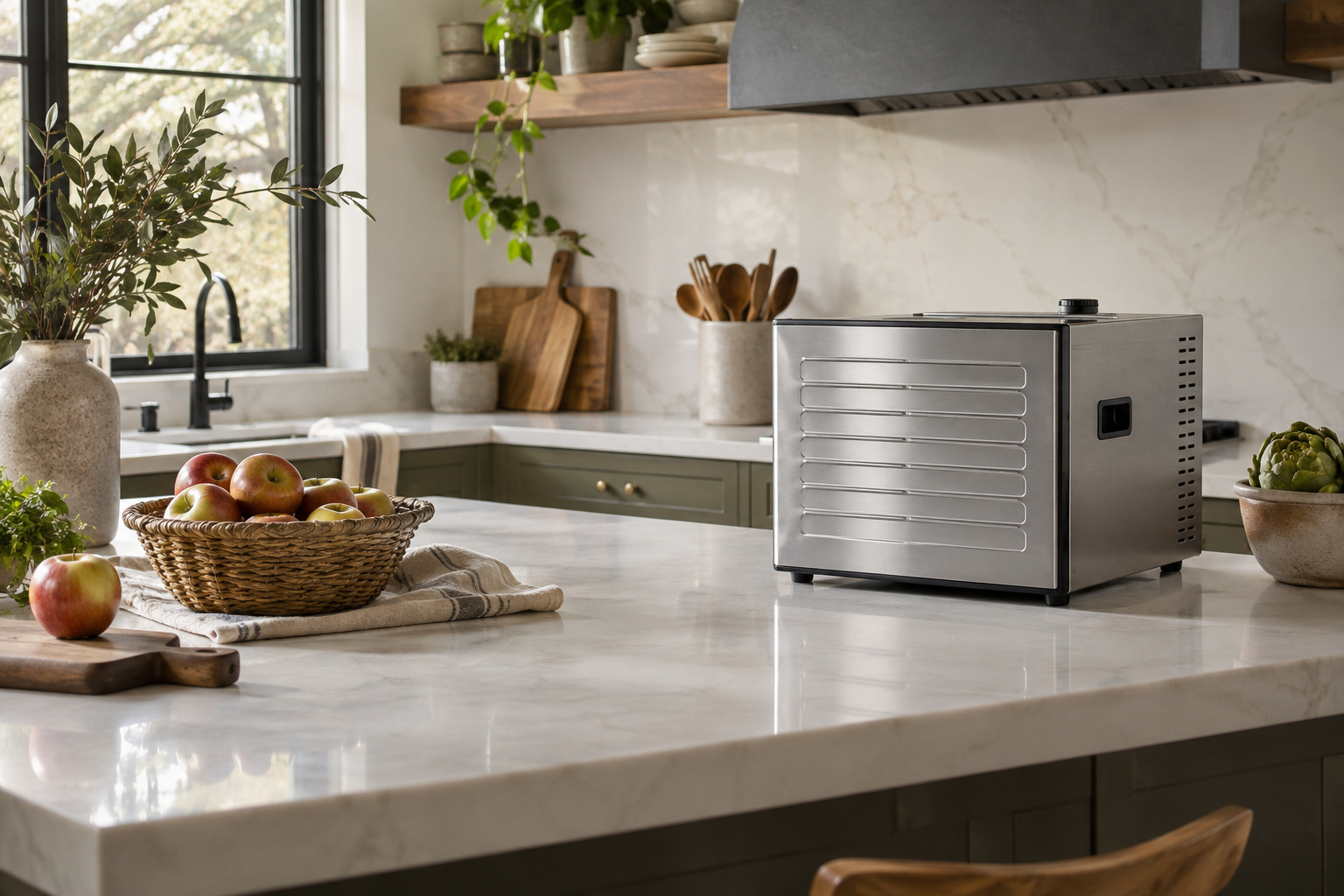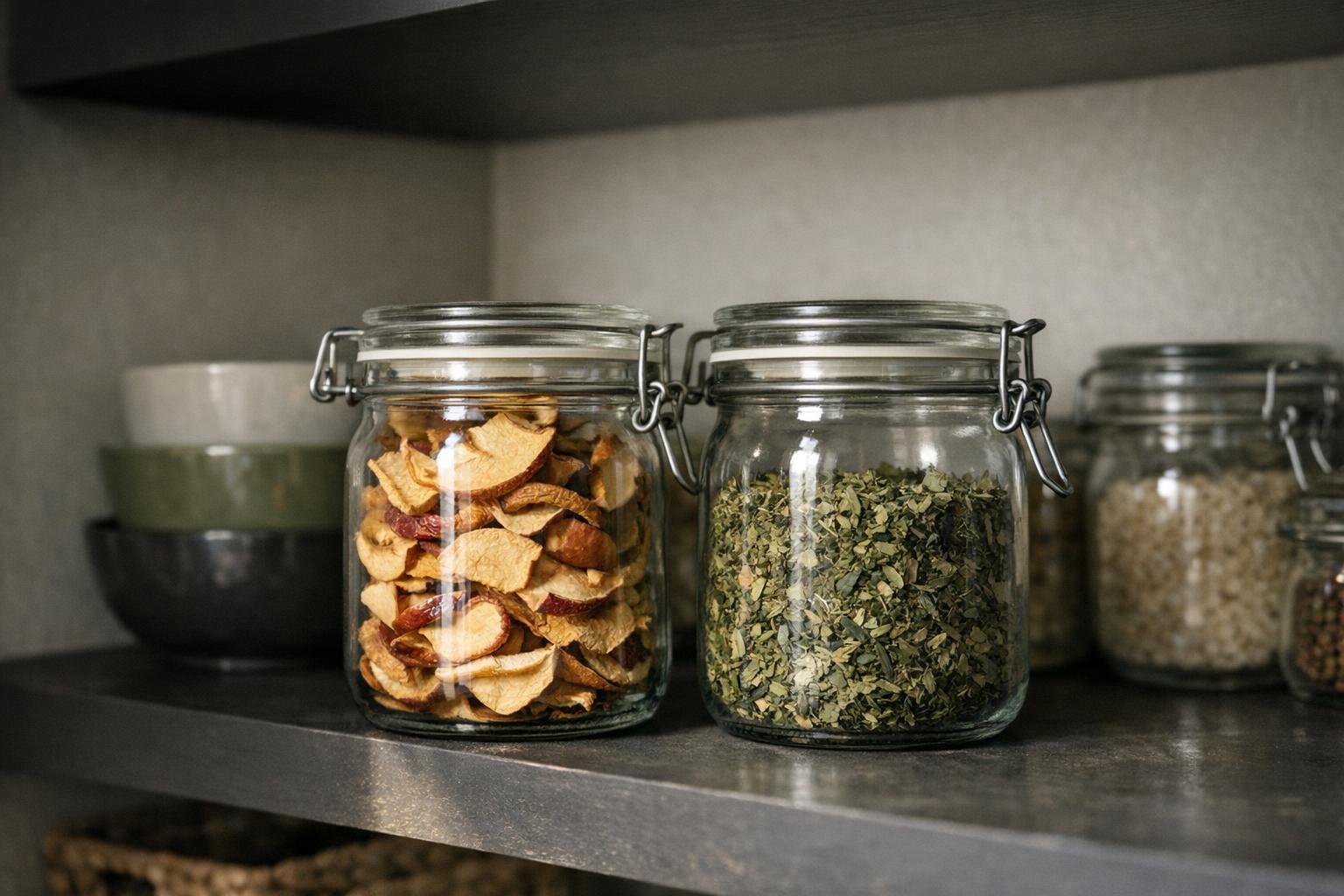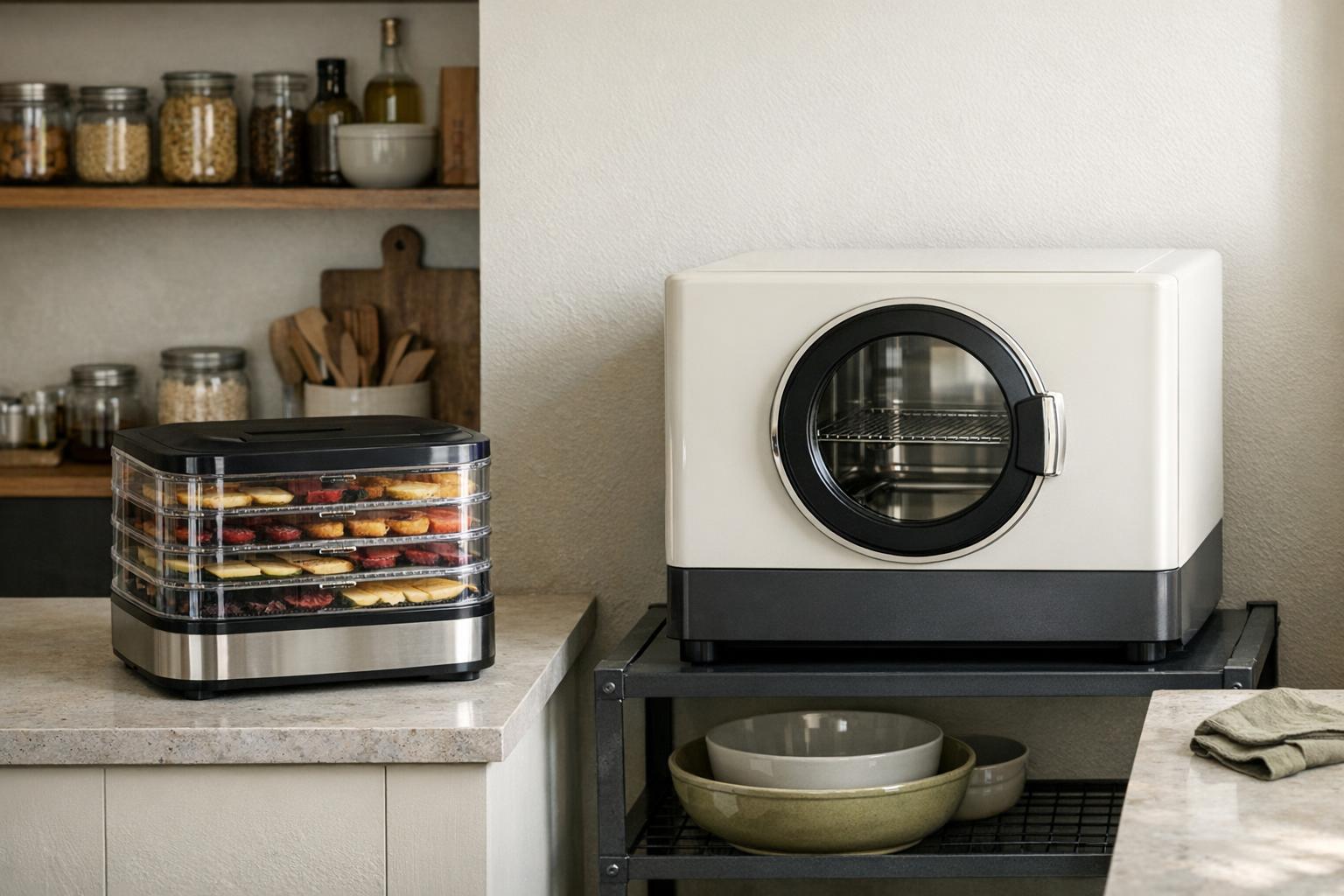
A home freeze dryer and a food dehydrator both make food shelf-stable by removing water, but they are very different appliances to buy, install and run. Cooperative Extension services in Arizona, Idaho, Iowa, Minnesota and Utah have published practical comparisons, and this guide gathers their figures in one place so you can decide which one fits the foods you actually preserve. We have not tested either type of machine ourselves.
What is the difference between a freeze dryer and a dehydrator?
Short answer A dehydrator uses gentle heat and a fan, removes about 80 to 90 percent of the water and usually finishes in 4 to 16 hours. A freeze dryer freezes food to roughly -40°F and then uses a vacuum to turn the ice straight into vapor, which takes about 20 to 40 hours, keeps more of the food's shape and nutrients, but costs $2,500 to $6,000. For fruit, vegetables, herbs and jerky on a modest budget, a dehydrator is the practical choice; a freeze dryer suits long-term storage of meals, dairy and eggs.
University of Arizona Extension describes the core difference simply: a dehydrator uses only heat to remove moisture, while a freeze dryer first freezes the food completely and then applies a powerful vacuum so that ice changes directly from solid to vapor. Iowa State University's AnswerLine puts it more bluntly: a freeze dryer is not a fancy food dehydrator.
Both methods lower the water available to microorganisms. Neither is a cooking step. Utah State University Extension stresses that freeze-drying does not kill bacteria, which stay viable but dormant, and University of Minnesota Extension notes that there is no heat-treatment step in the freeze-drying process. Foods that are normally cooked before eating, such as raw meat or eggs, must still be cooked after rehydration. Dehydrated meat has its own heat step, explained in our beef jerky dehydrator guide.
Sources: University of Arizona Extension: Basics of Home Freeze Drying; Iowa State AnswerLine.
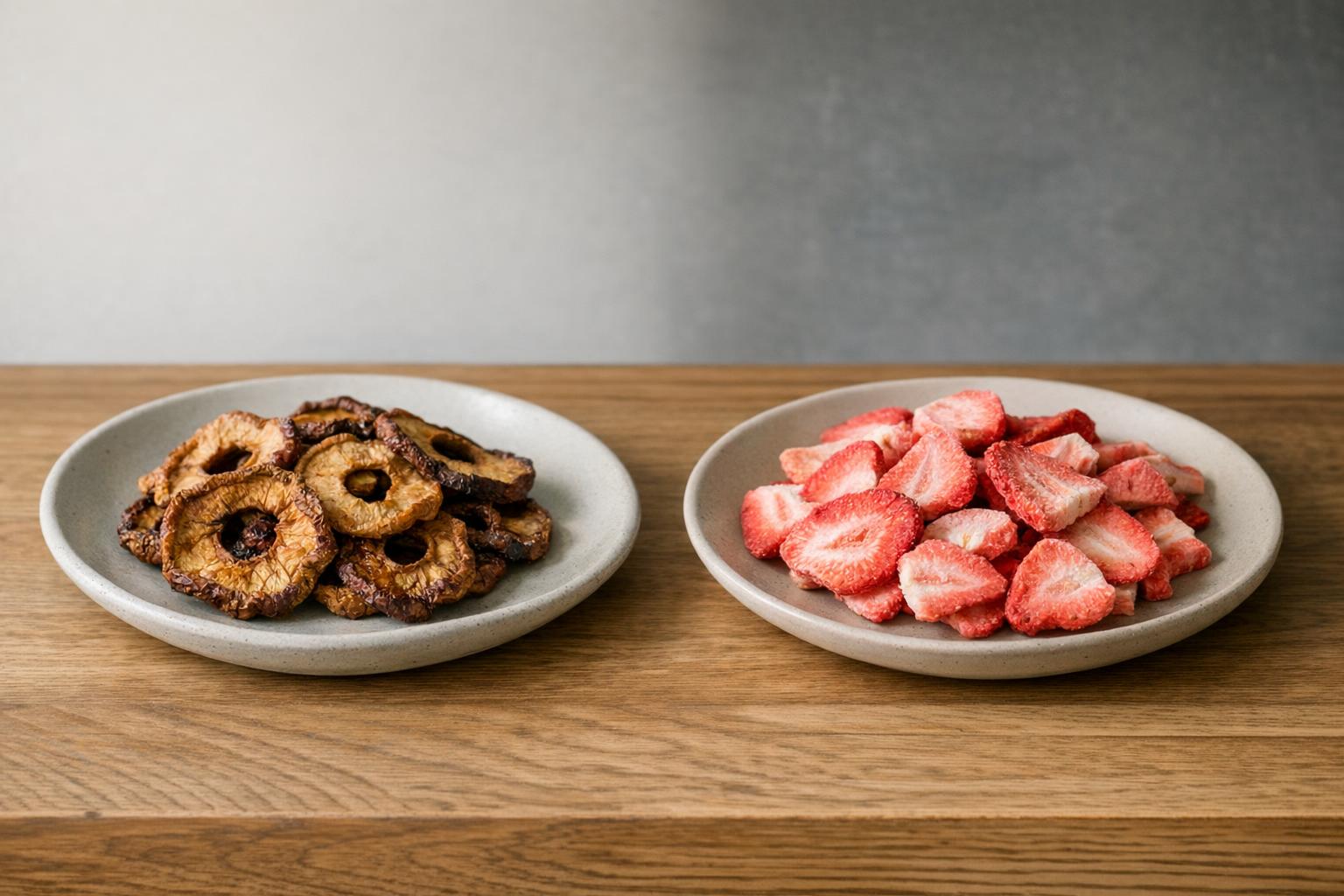
Side-by-side: time, cost, power and shelf life
The table below collects the figures published by extension services. Ranges are approximate and vary by model and food, so treat them as orders of magnitude, not as specifications for a particular appliance.
| Factor | Food dehydrator | Home freeze dryer |
|---|---|---|
| How water is removed | Low heat and a fan (designed to dry at about 140°F, per NCHFP) | Freezes to about -40°F, then vacuum sublimation |
| Water removed | About 80 to 90 percent (Iowa State) | Up to 90 percent in sublimation plus 1 to 2 percent in desorption (UMN) |
| Typical drying time | 4 to 16 hours (Arizona) | 20 to 40 hours (Arizona) |
| Purchase price | Varies by features (NCHFP) | About $2,500 to $6,000 (Arizona) |
| Electrical needs | Small countertop appliance | Small/medium on a general outlet; large and extra-large may need a dedicated 20-amp circuit (Arizona) |
| Running cost cited | Not published by these sources | About $1.50 (small load) to $3.50 (large load) per cycle (Arizona) |
| Shelf life cited | 4 months to 1 year (Iowa State) | Some foods up to 25 years in Mylar bags or #10 cans with oxygen absorbers (Arizona); home results not yet verified (Iowa State, USU) |
| Main maintenance | Washing trays and liners | Vacuum-pump oil every 4 to 5 batches on standard pumps, 20 to 25 on premier pumps (Arizona) |
Two caveats deserve emphasis. First, Iowa State notes that the 25-year figures come from manufacturers and commercial products; because home units are new, there is no verification yet that home freeze-dried food lasts that long. Utah State adds that no real data exists on the shelf life of home freeze-dried products. Second, nutrient comparisons depend on the food. Arizona Extension reports that freeze-drying can retain as much as 97 percent of heat-sensitive vitamins, while dehydrated foods can lose up to 40 percent.
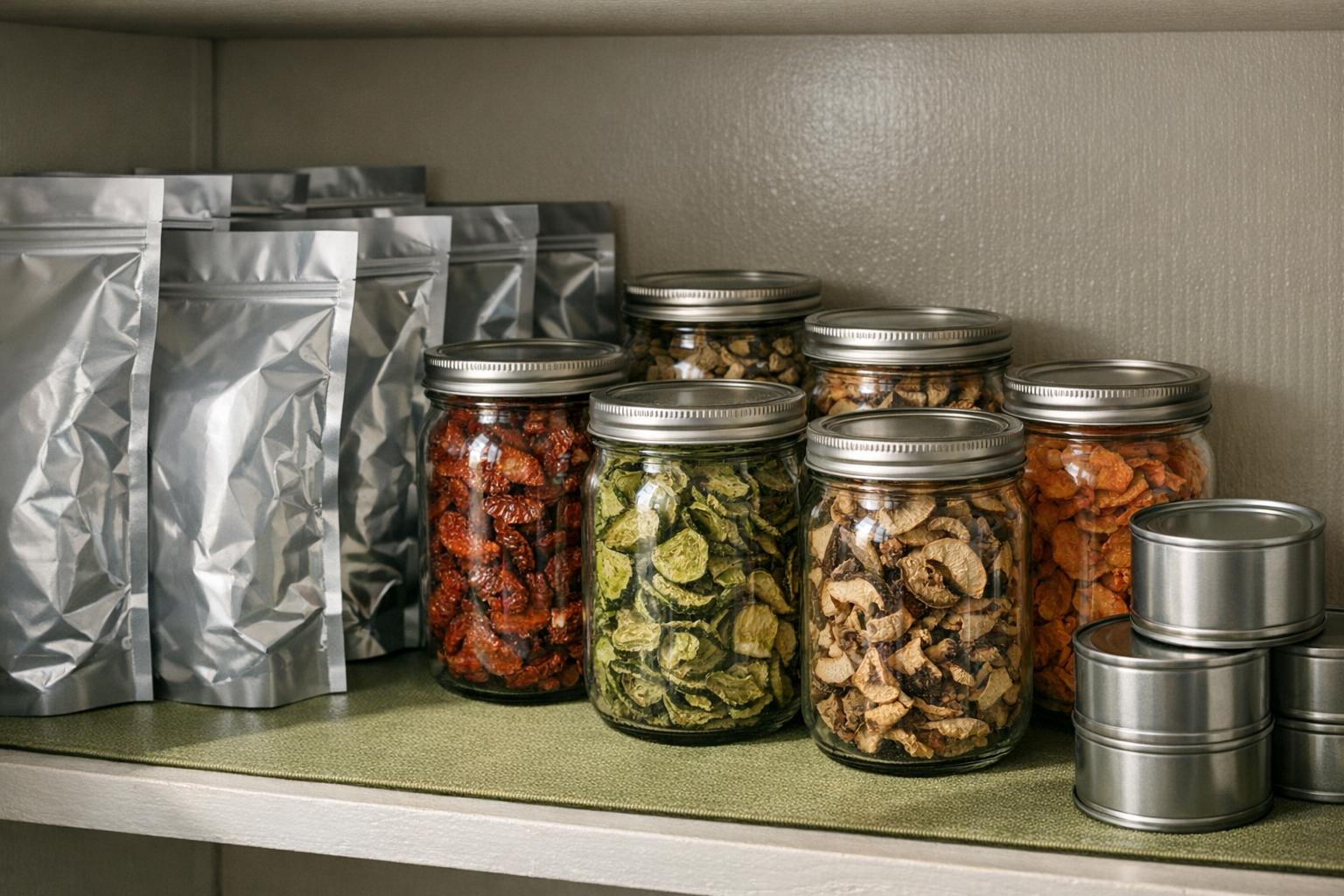
Which foods suit each method?
This is where the decision usually becomes clear. A dehydrator is built around the classic dried foods; a freeze dryer extends preservation to foods that heat-drying handles poorly.
- Dehydrator strengths: fruit slices and leathers, vegetables, herbs and jerky, the foods covered in our guides to drying fruit and drying vegetables.
- Freeze dryer strengths: Utah State lists most dairy and egg products, cooked meals and casseroles, and says freeze-drying can replace pressure canning of low-acid foods.
- Hard for home freeze dryers: foods high in fat or sugar and baked goods do not freeze-dry well (Iowa State, UMN); butter and chocolate on their own are examples Arizona gives.
- Texture after storage: dehydrated foods shrink, turn leathery and rehydrate slowly; freeze-dried foods rehydrate more fully and stay closer to fresh (Iowa State, USU).
Most vegetables still need blanching before either method, according to Arizona Extension and Utah State. Pretreatment is a preparation step, not a feature of the machine.
Space, noise and maintenance before you buy
Capacity looks different on the two appliances. NCHFP notes that twelve square feet of dehydrator drying space dries about a half-bushel of produce, and that limited capacity is a dehydrator's main disadvantage. Many models are expandable with extra trays; our expandable dehydrator comparison lists them.
Freeze dryers are much larger. Arizona Extension lists approximate outside dimensions of 17.4 × 21.5 × 26.8 inches and a weight of 91 pounds for a small unit, rising to about 265 pounds for an extra-large one, with prepared batch sizes of 6 to 9 pounds (small) to 35 to 45 pounds (extra-large). Iowa State summarizes the drawbacks Utah State raised: unit size, noise, drying and defrost time, cleaning and maintenance, small batch sizes and the cost of the machine, packaging supplies, sealers and electricity.
- Check the outlet first: confirm whether the model you want needs a dedicated 20-amp circuit.
- Plan packaging: freeze-dried food absorbs moisture quickly and should be packaged right away in moisture-proof containers (UMN).
- Budget for supplies: Mylar bags, #10 cans and oxygen absorbers are recommended for long-term storage (Arizona).
- Test doneness: UMN suggests cutting a piece from each tray and looking for dark, moist spots in the center.
Which one should you buy?
Match the appliance to the job, not to the most impressive shelf-life claim. The decision rules below summarize what the extension sources emphasize.
| Your main goal | Better fit | Why (per sources) |
|---|---|---|
| Snacks: fruit, leathers, jerky, herbs | Dehydrator | Shorter runs (4 to 16 h) and far lower purchase cost |
| Long-term pantry storage of meals | Freeze dryer | Shelf-stable, lightweight results with fuller rehydration |
| Dairy, eggs, cooked dishes | Freeze dryer | Utah State: preserves foods other methods cannot |
| Limited counter space or standard wiring | Dehydrator | Large freeze dryers may need a dedicated 20-amp circuit |
If a dehydrator is the right tool, start with our guide to choosing a food dehydrator and the everyday dehydrator comparison. Whichever you choose, the finished food still needs the cooling, packaging and labeling routine described in our dried-food storage guide.
Sources: Utah State University Extension: Buying a Home Freeze-Dryer; University of Minnesota Extension: Freeze-drying.
Sources and further reading
- University of Arizona Cooperative Extension: Basics of Home Freeze Drying (AZ2097a, 2025)
- Iowa State University Extension AnswerLine: Preserving by Home Freeze Drying
- Utah State University Extension: Buying a Home Freeze-Dryer, What to Know Before You Go
- University of Minnesota Extension: Preserving food at home, Freeze-drying
- NCHFP: Food Dehydrators