A useful dehydrator fits the food you prepare and the way you work. A large tray count looks attractive, but it tells you little about the space each tray offers, how easily you can load it, or where the machine will live. Start with a realistic weekly batch and a food-preservation method, then compare appliances against those needs. This guide is a buying framework, not a claim that we have tested the listings.
Describe your first three batches
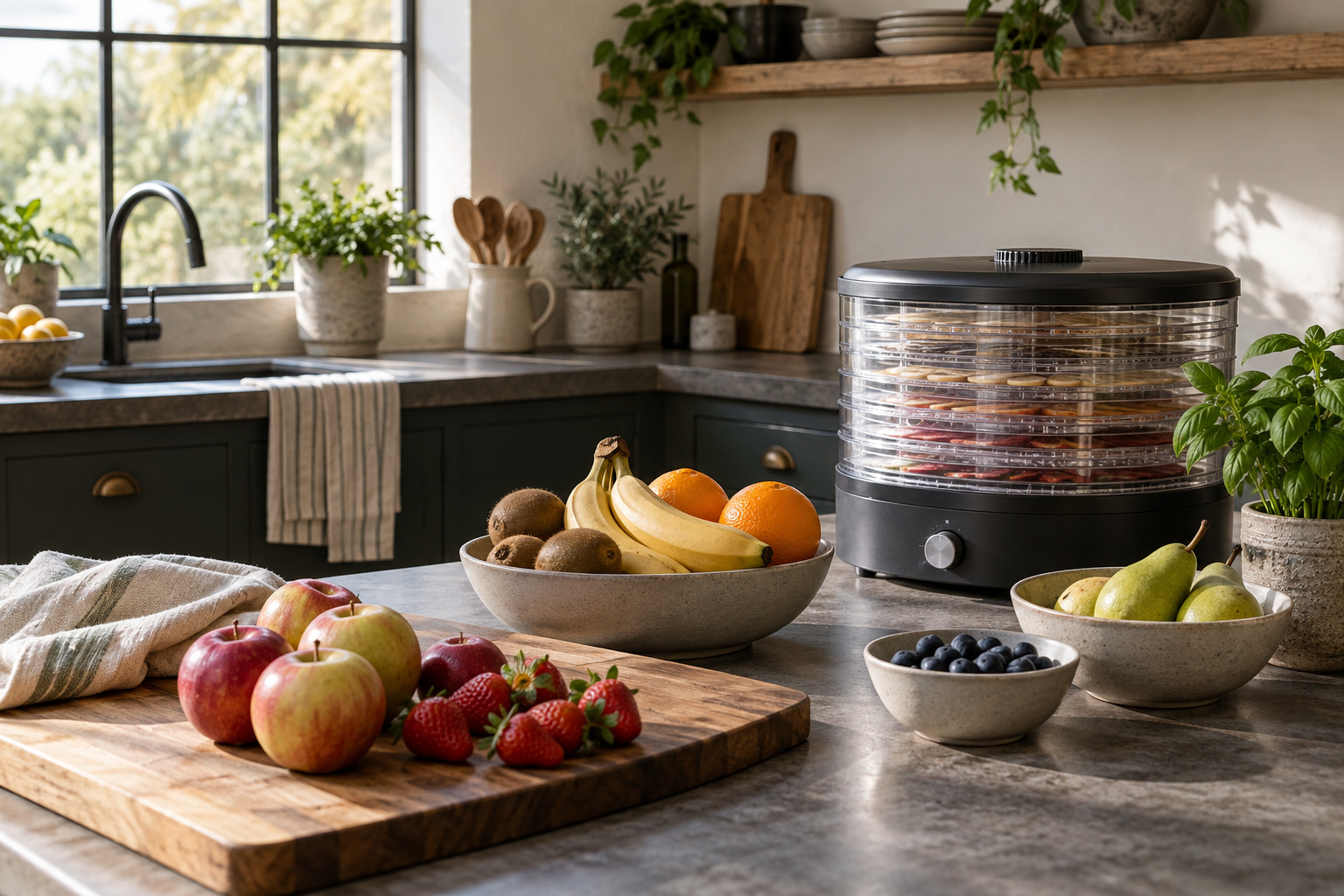
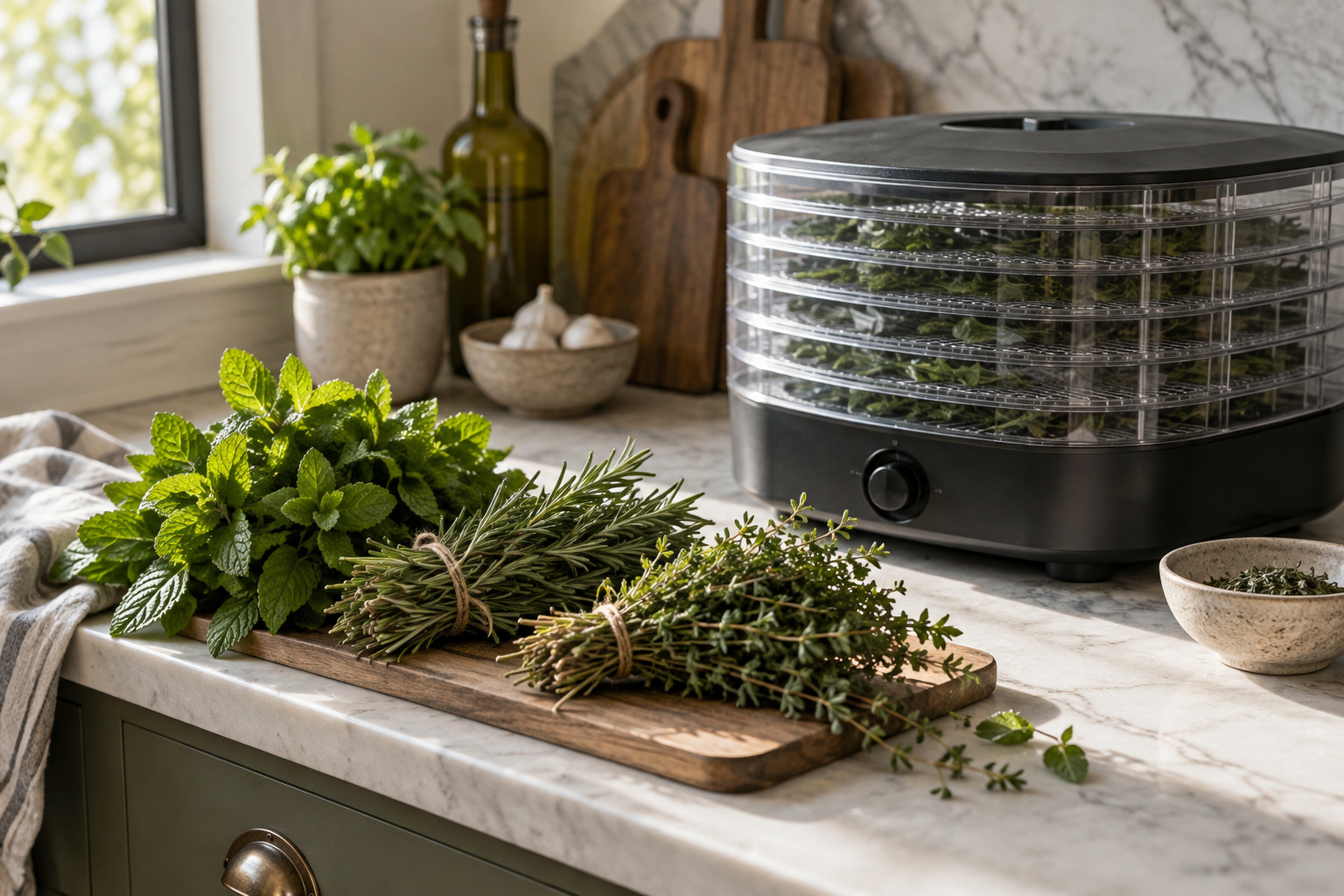
Write down three foods you genuinely expect to prepare: perhaps apple slices, garden herbs and a tray of fruit leather. Next to each, list the preparation work, the surface it needs and the source instructions you will follow. This small exercise exposes requirements that a generic feature list misses. A machine can have plenty of trays but include no suitable solid sheet for puree.
Separate occasional use from seasonal processing. Drying a small grocery purchase is different from dealing with a harvest that arrives in one weekend. Before buying for the largest imagined batch, ask whether you have enough counter space, time to prepare food and containers for the result. Read our fruit preparation guide to see the work that surrounds the drying cycle.
Turn those batch notes into a shortlist: mark each food with its required tray surface, usable layout space and documented control needs. Start with the everyday dehydrator comparison when those requirements are modest; use the batch-prep comparison when repeated loading is the main constraint. Neither selection replaces the exact-model checks below.

Measure space you can actually use
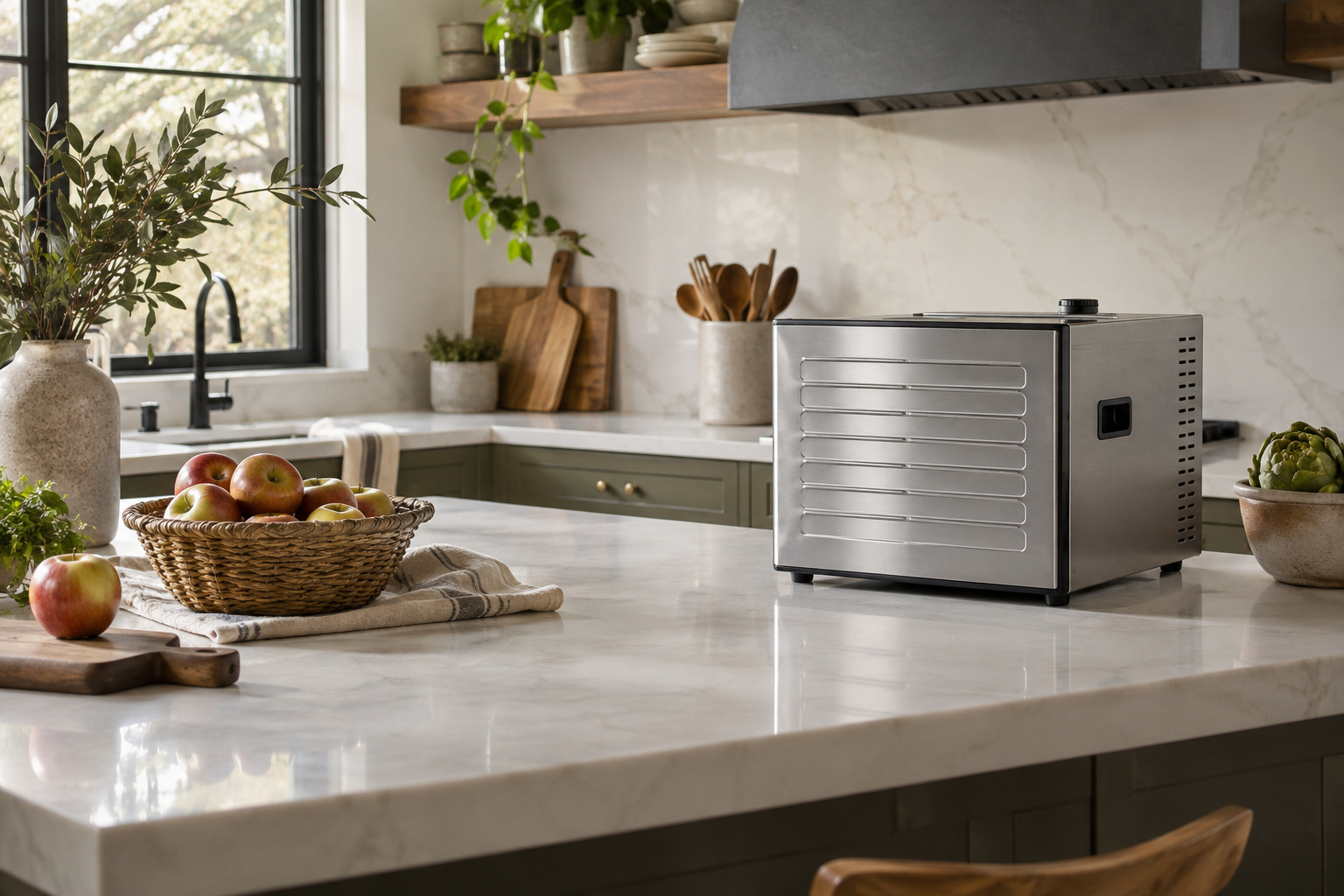
Use the appliance dimensions to check its working location, with the manufacturer’s specified clearances and access to its door or lid. Also measure the cupboard if you expect to put it away. A machine that must be unpacked from behind other equipment may be used less often than one with an accessible home.
For capacity, ask for usable tray dimensions, not just the number of levels. Rails, raised edges and center openings can reduce the area available for food. Sketch your normal prepared batch as a single-layer layout. Our tray planning tool converts that measured layout into an illustrative tray count; it cannot convert pounds of every food into a reliable capacity figure.
Source: NCHFP: Food Dehydrators.
Read controls as operating features
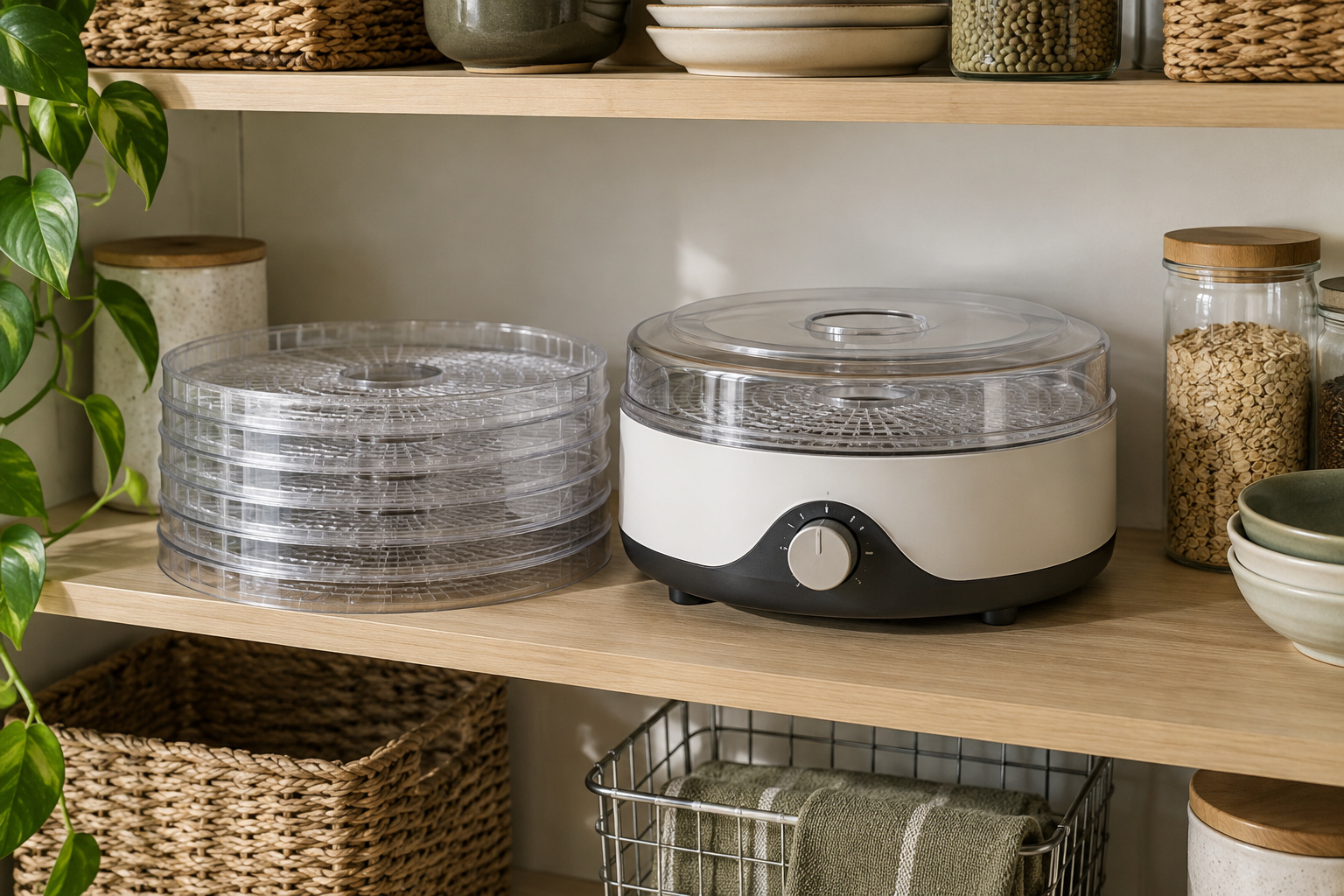
Check the temperature range and how the setting is adjusted. The lower end matters if you want to dry herbs; the upper number alone is not a food-safety guarantee. Look for clear controls you can read in your actual kitchen, along with instructions that explain the timer, automatic stop and any restart behavior.
A countdown timer provides convenience, but it does not recognize when every piece is dry.
- Plan to inspect the batch and follow the food-specific process.
- Our temperature and safety guide explains why air settings, time and food conditions are different things.
- Do not buy an appliance on the assumption that its “jerky” label validates a complete meat-preservation procedure.
Compare loading and cleanup routines
Consider how you will remove a tray in the middle of the stack, inspect the back of a shelf and carry a loaded tray to the counter. These are practical questions to answer from the exact manual or an accurate product demonstration. A photograph of a full machine does not establish how easy those movements will be in your space.
Ask which parts can be removed, whether they fit your sink, and which cleaning methods the maker permits. Dishwasher compatibility must be confirmed separately for trays, liners and the housing. Check whether replacement trays and approved liners can be identified by model number. This turns a vague promise of easy maintenance into a list of facts you can verify before ordering.
Keep shopping claims separate from evidence
We show exact Amazon listings and seller feature statements to help you locate products. Those statements are not independent drying tests. Our comparison ratings rank documented listing specifications because we do not have comparable measured temperature accuracy, noise, drying uniformity or energy use for every listing. Position in a list is not proof of superior performance.
Open the listing and verify the selected variation, included pieces and model identifier. Then compare it with the current manufacturer manual. If a detail conflicts, pause that purchase until it is resolved. For an accessory, consult the tray and liner checklist; a similar shape or shared brand name does not settle fit.
Make a short decision sheet
Keep the final comparison to the requirements that matter to your first batches: working footprint, usable tray space, suitable controls, approved food-contact surfaces, cleanup method and access to replacement parts. Mark each item confirmed, unclear or unsuitable. An unresolved essential requirement is a reason to investigate further, regardless of the number of advertised functions.
For a first purchase, a manageable learning batch is a sensible editorial priority. Record what you want to make and what would cause you to reject a model. After purchasing, retain the manual and record the appliance model beside your batch notes. That gives you a clearer basis for buying additional trays later and avoids treating a new accessory as automatically compatible.
For measured batch-space planning, use the tray layout estimator. Its result is a space estimate only, not a processing time or safety approval.
| Section | Key point |
|---|---|
| Describe your first three batches | Separate occasional use from seasonal processing. |
| Measure space you can actually use | Sketch your normal prepared batch as a single-layer layout. |
| Read controls as operating features | Check the temperature range and how the setting is adjusted. |
| Compare loading and cleanup routines | Dishwasher compatibility must be confirmed separately for trays, liners and the housing. |
| Keep shopping claims separate from evidence | Those statements are not independent drying tests. |
| Make a short decision sheet | Mark each item confirmed, unclear or unsuitable. |