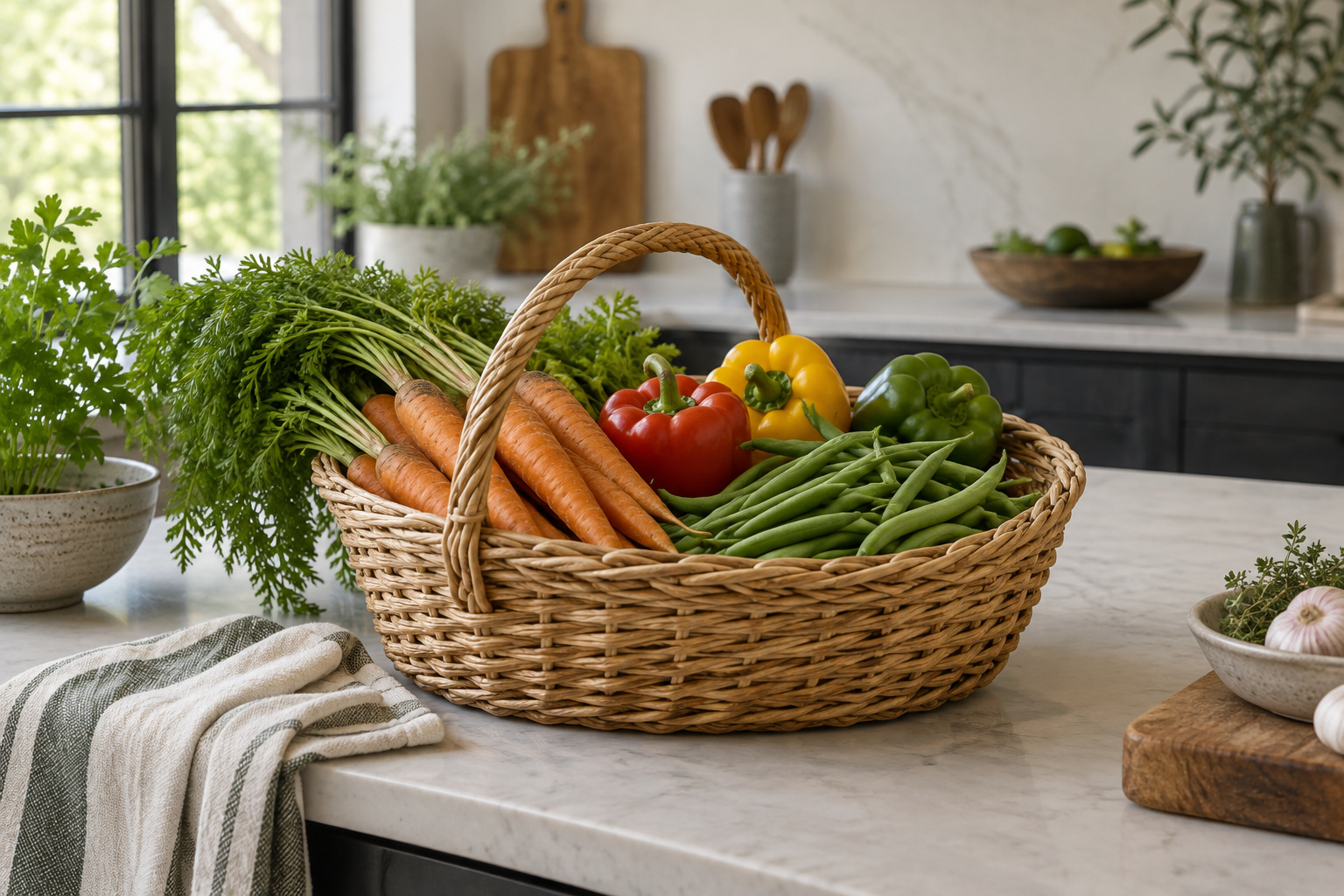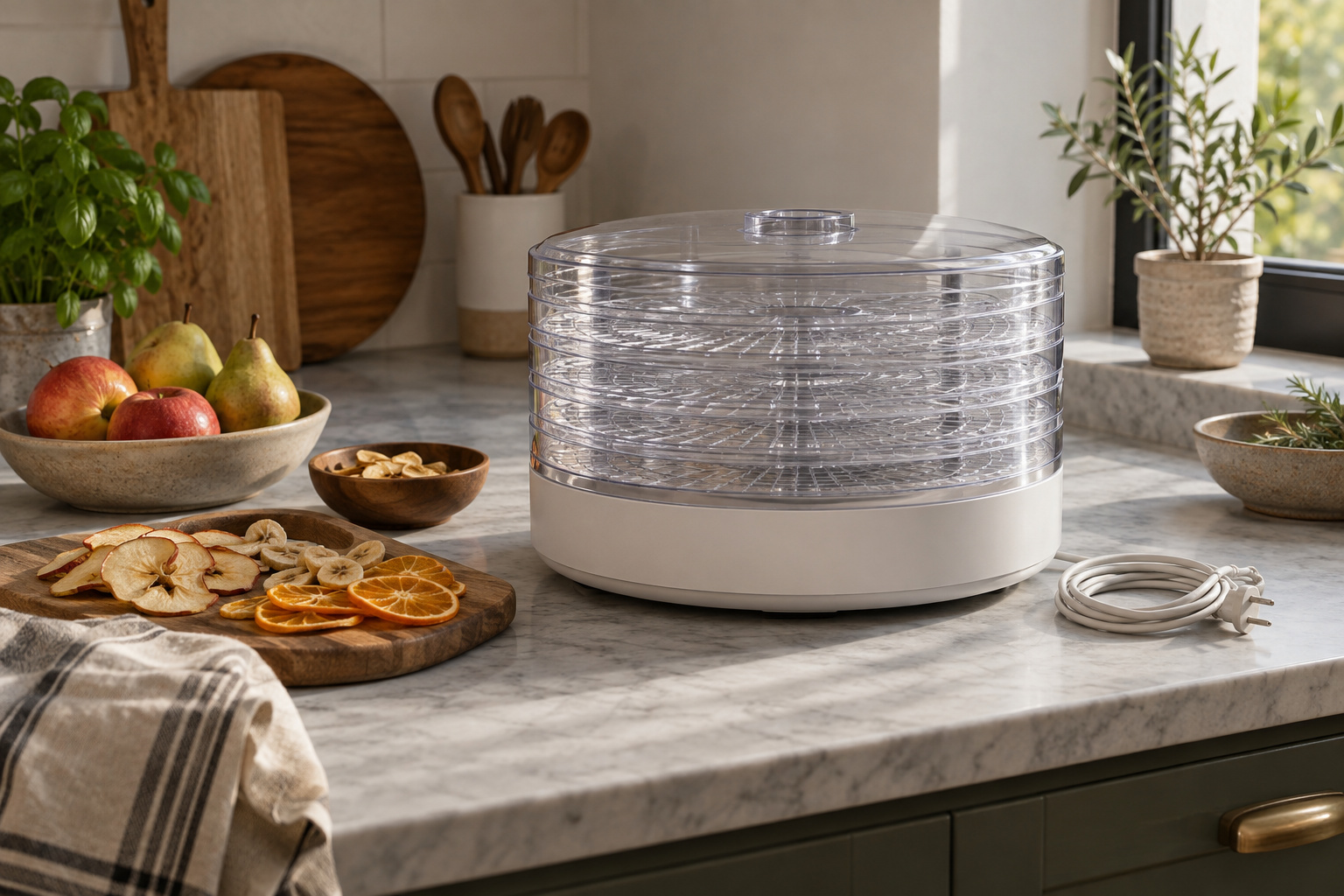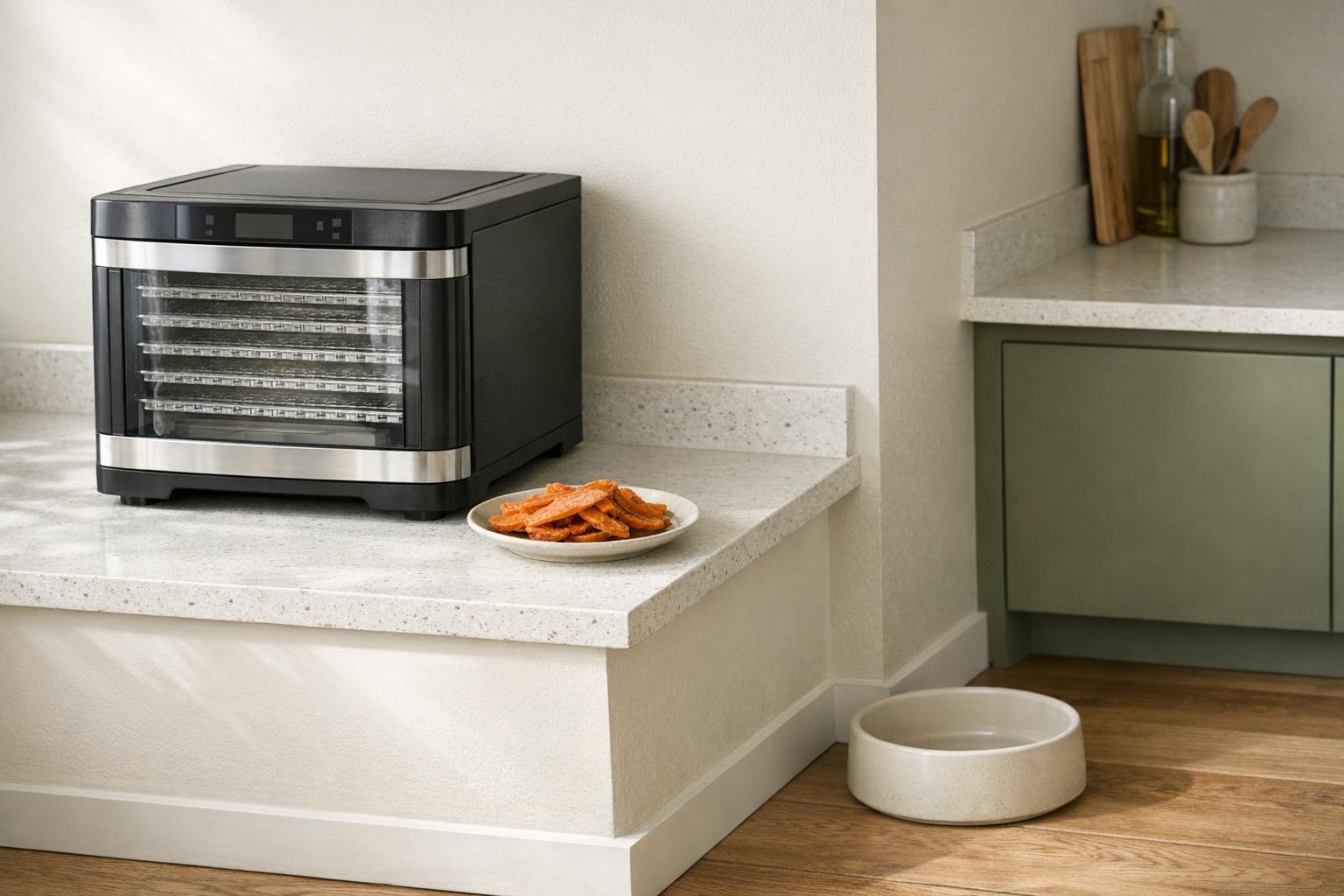
A food dehydrator can turn plain vegetables or cooked lean meat into simple chews for a dog, and veterinary nutritionists at Tufts University even suggest it as a way to make at-home vegetable dry chews. The safety rules, however, come from two directions at once: human food-safety guidance for handling and heating meat, and veterinary guidance on which ingredients and how many treats are appropriate. This guide combines FDA, USDA, ASPCA, WSAVA and university veterinary sources. It is general information, not veterinary advice for your individual dog.
Can you dehydrate dog treats at home?
Short answer Yes. Dehydrate plain, dog-safe vegetables (blanched where the drying method calls for it) or lean meat that has been cooked to a safe internal temperature first, with no seasoning. Keep onion, garlic, grapes, raisins, xylitol and macadamia nuts out entirely, store the dried treats cool and dry, and keep all treats under 10 percent of your dog's daily calories.
Each part of that answer has a source. The Tufts Cummings School's Petfoodology team recommends crunchy vegetables as chews or using a dehydrator to make at-home vegetable dry chews. The FDA says that if you use raw ingredients to make your own cooked pet food, you should cook all food to a proper internal temperature measured with a food thermometer. WSAVA and the UC Davis veterinary Nutrition Support Service both cap treats at 10 percent of daily calories.
- Best starting point: plain vegetables, which UC Davis describes as good options for many dogs because they are usually low in protein, fat, sodium and phosphorus.
- Meat treats: only from meat that has been cooked to a safe internal temperature before drying, handled like the human jerky process in our beef jerky guide, without the marinade.
- Ask your vet first: WSAVA notes that dogs with medical conditions, dietary sensitivities or veterinary diets may not be suited to conventional treats.
Sources: Tufts Petfoodology: Safe and healthy treats; FDA: Raw pet food diets can be dangerous.
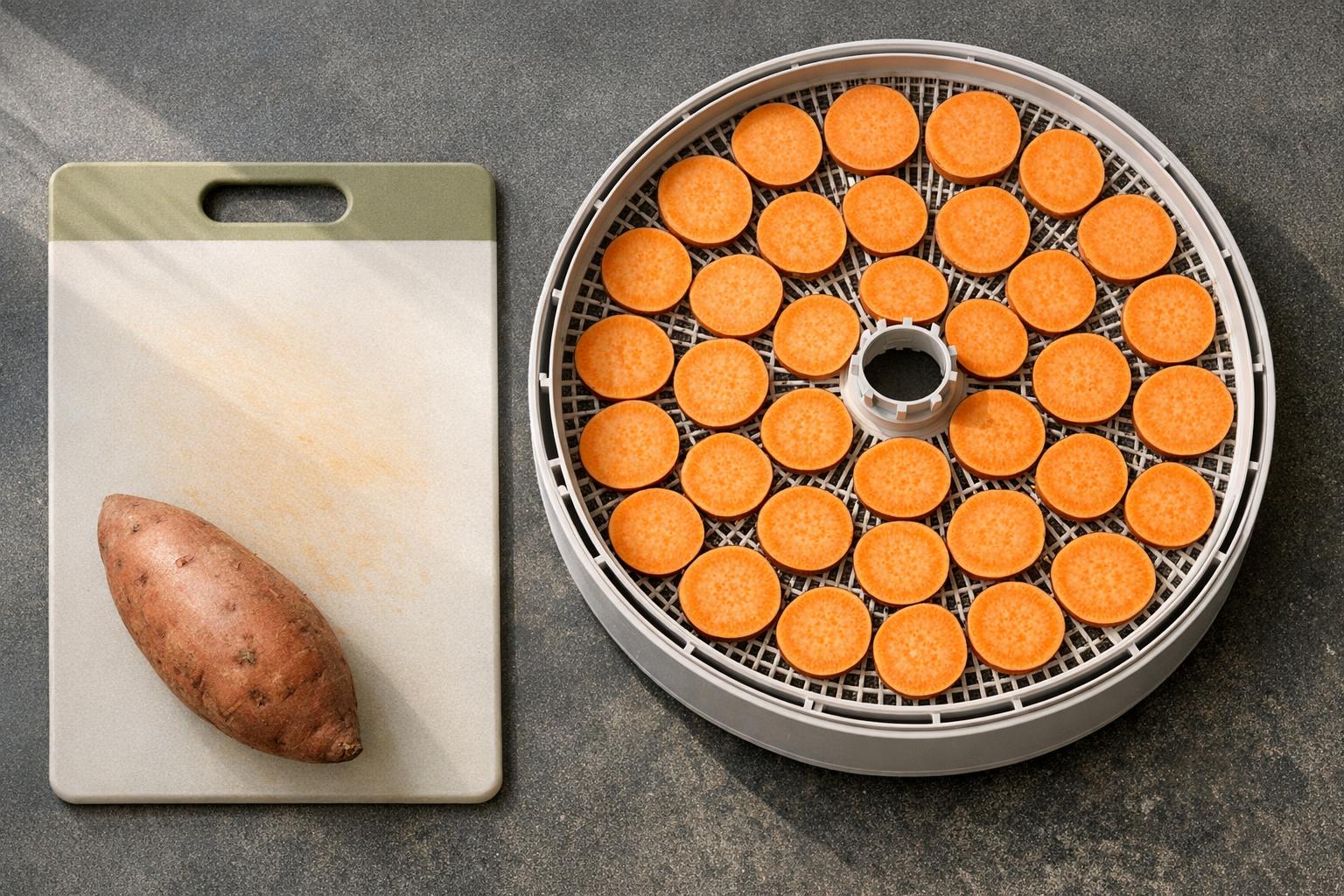
Pick dog-safe ingredients and skip the seasoning
Ingredient choice is the step with the least room for error. The ASPCA Animal Poison Control Center and the FDA both list common kitchen foods that can harm pets. Seasoned human snacks are a particular trap: onion powder and garlic powder appear in many jerky marinades, including the tested human recipe on this site, so dog treats should be made in a separate, unseasoned batch.
| Ingredient | Why it is excluded | Source |
|---|---|---|
| Onion, garlic, chives | Can cause gastrointestinal irritation and red blood cell damage leading to anemia | ASPCA |
| Grapes and raisins | Exposure can lead to kidney damage in dogs | ASPCA |
| Xylitol (some sugar-free products) | Can cause low blood sugar and potentially liver damage | ASPCA; FDA |
| Macadamia nuts | Can cause weakness, vomiting, tremors and hyperthermia | ASPCA |
| Chocolate, caffeine | Methylxanthines can cause vomiting, abnormal heart rhythm and seizures | ASPCA |
| Added salt | Excessive salt can cause thirst, electrolyte problems and, in severe cases, seizures | ASPCA |
Fruit pits from cherries, peaches, nectarines and plums should also be removed: the FDA notes that their bigger risk is a gastrointestinal obstruction. If you are unsure about a specific food, the FDA directs pet owners to a veterinarian or the ASPCA Animal Poison Control Center.
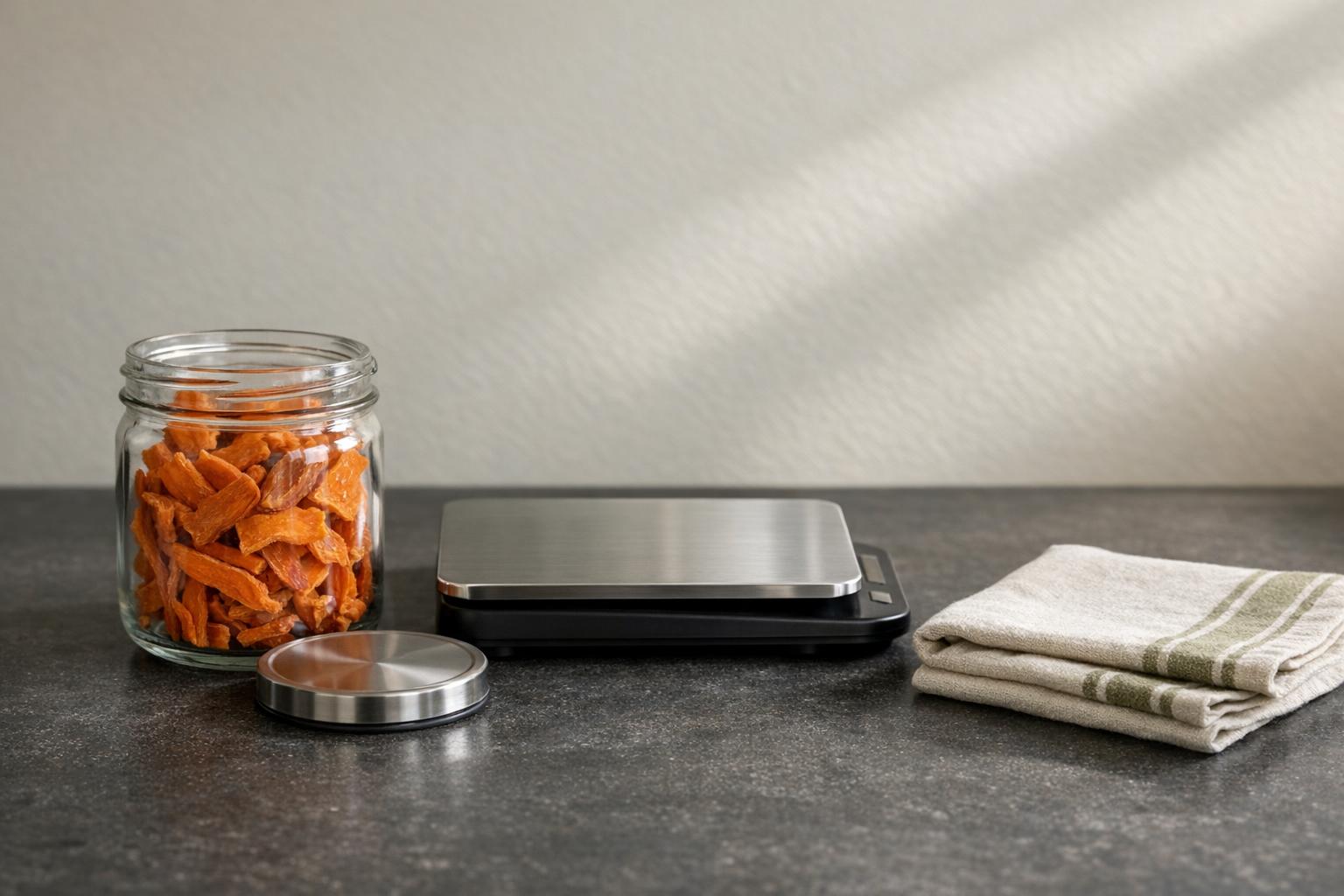
How to dry vegetable chews
Vegetable chews follow the same preparation as vegetables dried for people, minus any salt or seasoning. Penn State Extension's drying guide recommends blanching most vegetables, which slows enzyme reactions and softens the cell structure so moisture escapes more easily. It describes dried vegetables as tough, brittle or crunchy when done, and notes that they do not need the conditioning step used for fruit.
- Wash and trim: start with sound produce and clean equipment.
- Cut evenly: uniform pieces dry at the same rate; small pieces need a fine-mesh tray because food shrinks (Penn State).
- Blanch if required: follow the vegetable-specific directions in our vegetable drying guide.
- Dry until brittle: NCHFP describes dehydrators as designed to dry foods at about 140°F; avoid excessive heat, which Penn State says can cause case hardening.
- Size the chew: WSAVA advises offering treats of an appropriate size and shape and supervising your dog with chews.
A fine mesh sheet or liner keeps small pieces from slipping through the tray. Our tray and liner guide explains how to confirm that an accessory fits your exact model, and the tray and accessory comparison lists mesh sheets by documented size.
Meat treats: cook first, then dry
Raw meat is where homemade dog treats can become a household food-safety problem. The FDA's Center for Veterinary Medicine screened over 1,000 pet food samples between 2010 and 2012; of 196 raw dog and cat food samples, 15 were positive for Salmonella and 32 for Listeria monocytogenes. The FDA's conclusion is that raw pet food poses risks to both pets and the people handling it, and that homemade cooked pet food should be cooked to a proper internal temperature.
For dried meat, the most specific published temperatures are the USDA FSIS jerky recommendations: heat meat to 160°F and poultry to 165°F, measured with a food thermometer, before dehydrating, then dry at a steady 130 to 140°F. The same research FSIS cites shows why the dehydrator alone is not enough: evaporating moisture keeps the meat itself from heating up until late in drying.
- Use lean, plain meat: trim fat; no marinade, salt or onion/garlic seasoning.
- Heat to temperature: 160°F for beef, 165°F for chicken or turkey, checked in several pieces.
- Separate raw tools: FDA advises washing hands for at least 20 seconds and cleaning, then disinfecting, surfaces and utensils that touched raw meat.
- Disinfect correctly: FDA gives 1 tablespoon of bleach per quart (4 cups) of water as an effective disinfectant after washing with hot soapy water.
The FDA has also investigated illness reports in dogs associated with commercial jerky pet treats. UC Davis's treat guidelines point owners to that FDA update, which covers both dried meat and sweet potato jerky treat products. Making treats at home does not make that history irrelevant: keep portions small and stop feeding any treat that seems to upset your dog, then call your veterinarian. Our jerky food-safety guide covers the human side of the same process.
Portion, store and clean up
Treats are extras, not meals. WSAVA states that treats should always make up less than 10 percent of a dog's daily calorie intake and should never replace a complete and balanced diet. UC Davis gives an illustrative example: a dog eating 100 Calories per day should get no more than 10 Calories from treats. Tufts adds that if a commercial treat lists no calories, you should contact the company; for homemade treats, ask your veterinary team how much is appropriate.
| Dog's daily Calories (from your vet) | Maximum Calories from all treats |
|---|---|
| 100 kcal (UC Davis example) | 10 kcal |
| 300 kcal (Tufts example: average 10 lb dog) | 30 kcal |
| 1,400 kcal (Tufts example: average 75 lb dog) | 140 kcal |
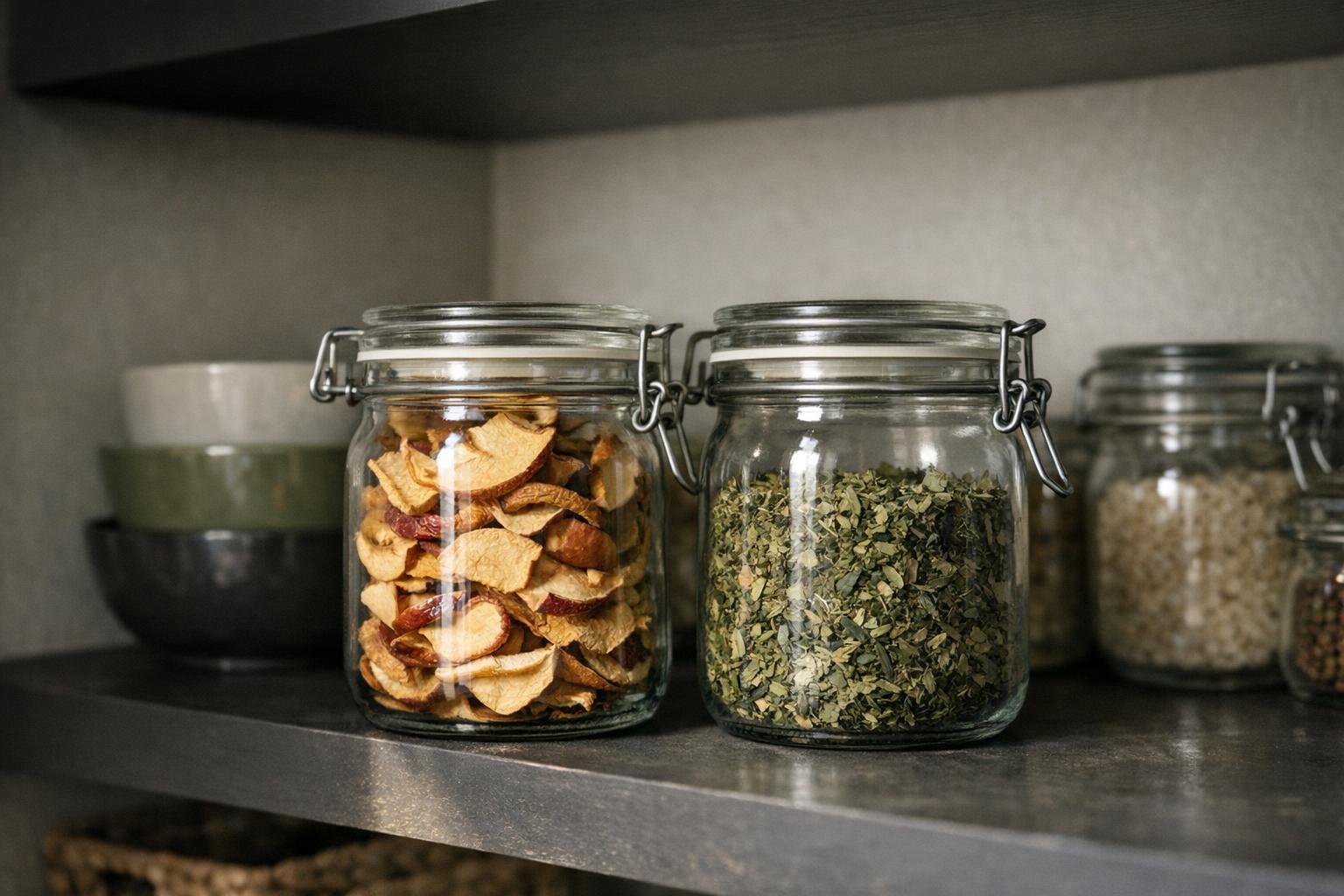
For storage, follow the FDA's dry pet food guidance: keep it in a cool, dry place below 80°F and tightly closed, out of your pet's reach so it cannot eat a whole supply at once. Wash bowls and scoops with soap and hot water after use. Then clean the dehydrator trays as your manual specifies; our dehydrator cleaning guide and dried-food storage guide cover the details.
Sources: WSAVA: Feeding treats to your dog; UC Davis VMTH: Treat guidelines for dogs; FDA: Tips for safe handling of pet food and treats.
Sources and further reading
- Tufts Cummings School Petfoodology: What are safe and healthy treats for my pet?
- WSAVA: Feeding treats to your dog
- UC Davis Veterinary Medical Teaching Hospital: Treat guidelines for dogs
- FDA: Get the Facts! Raw Pet Food Diets can be Dangerous to You and Your Pet
- FDA: Tips for Safe Handling of Pet Food and Treats
- Tufts Cummings School Petfoodology: Treat Options for Dogs and Cats Without Unbalancing Their Diet
- ASPCA Animal Poison Control: People Foods to Avoid Feeding Your Pets
- USDA FSIS: Jerky and Food Safety
- Penn State Extension: Let's Preserve, Drying Fruits and Vegetables